





Changing careers to nursing can feel like it requires starting over, but for most students, that's not the case. Whatever you've already done, there’s a good chance some of it will count toward your next step into nursing.
Key Details: Changing careers to nursing typically means picking the type of nurse you want to become, researching your options, checking which of your previous college credits might transfer, knocking out any remaining prerequisites, applying to a nursing program, and then meeting your state's licensing requirements.
It's a step-by-step process — here's how to make it happen.
How Do You Change Careers to Nursing?
Changing careers to nursing can feel like a major transition, but the path forward is fairly straightforward once you understand the steps involved. Here’s a quick look at how to make the transition:
Decide which nursing career you're aiming for
Look into the education and licensing requirements for that path
Get your previous college credits evaluated
Complete any nursing prerequisites you still need
Apply to nursing school
Work through your program and clinical hours
Sit for your licensing exam
Start applying for nursing jobs
Your exact timeline will depend on which nursing role you're pursuing, how much college you've already completed, and the specific program you choose, but every student's path will likely pass these same basic milestones.

1. Decide What Type of Nurse You Want to Become
Working as a “nurse” isn't one single job. It's a whole category of careers, and figuring out which one fits you will help you avoid unnecessary coursework.
Certified Nursing Assistant (CNA): A great entry point for hands-on patient care, though it's worth noting that a CNA isn't a licensed nurse.
Licensed Practical/Vocational Nurse (LPN/LVN): Usually involves a practical nursing program followed by licensure — often a quicker route into patient care.
Registered Nurse (RN): The most common goal for career changers. You'll typically pursue either an Associate Degree in Nursing (ADN) or a Bachelor of Science in Nursing (BSN), then meet your state's RN licensing requirements.
Advanced Practice Registered Nurse (APRN): This requires graduate-level education and additional credentials — a strong goal for later in your nursing career rather than your starting point.
Once you know your pathway, comparing programs gets a lot easier, and you'll know exactly what to check for as you research schools.
Learn More: A Complete Guide to Nursing Career Pathways (Degrees, Licensure & Career Growth Explained)
2. Research Nursing Degree and Licensing Requirements
Requirements shift depending on the nursing path you choose, the program you apply to, and the state you plan to practice in. That’s why it’s best to look closely rather than assume.
If RN is your goal, you'll generally choose between two undergraduate routes: an ADN or a BSN. Either way, earning the degree is only part of the process. Graduates also need to meet their state board of nursing's requirements and pass the NCLEX-RN to become licensed.
There's no single pathway, so it's worth checking both the admission requirements at schools you're considering and the licensing requirements from your state board of nursing before you commit to a curriculum.
Can you become a nurse if you already have a bachelor's degree? Yes. A bachelor's degree in another field usually works in your favor. Depending on your coursework, some general education or prerequisite credits may transfer, and some students with non-nursing degrees qualify for accelerated BSN programs designed specifically for people in your position.
3. Find Out Which College Credits You Can Use
There’s one mistake many career changers make before they even start: you probably don't need to start college from scratch.
Coursework you've already completed might satisfy:
General education requirements
Math requirements
English or composition requirements
Social science requirements
Some science or prerequisite requirements, depending on the school
Transfer policies aren't identical everywhere, though. What counts can depend on the institution, how closely the course matches what's required, the grade you earned, and how recently you took them.
The most practical approach is to ask any school you're considering to review your transcripts before you assume anything is or isn't going to apply towards your degree.
4. Complete Your Nursing School Prerequisites
For most career changers, prerequisites are the bridge between the education you already have and the nursing program you're aiming for.
Common prerequisite courses include:
Requirements vary by program, so always confirm the exact list with the school you plan to attend before signing up for classes.
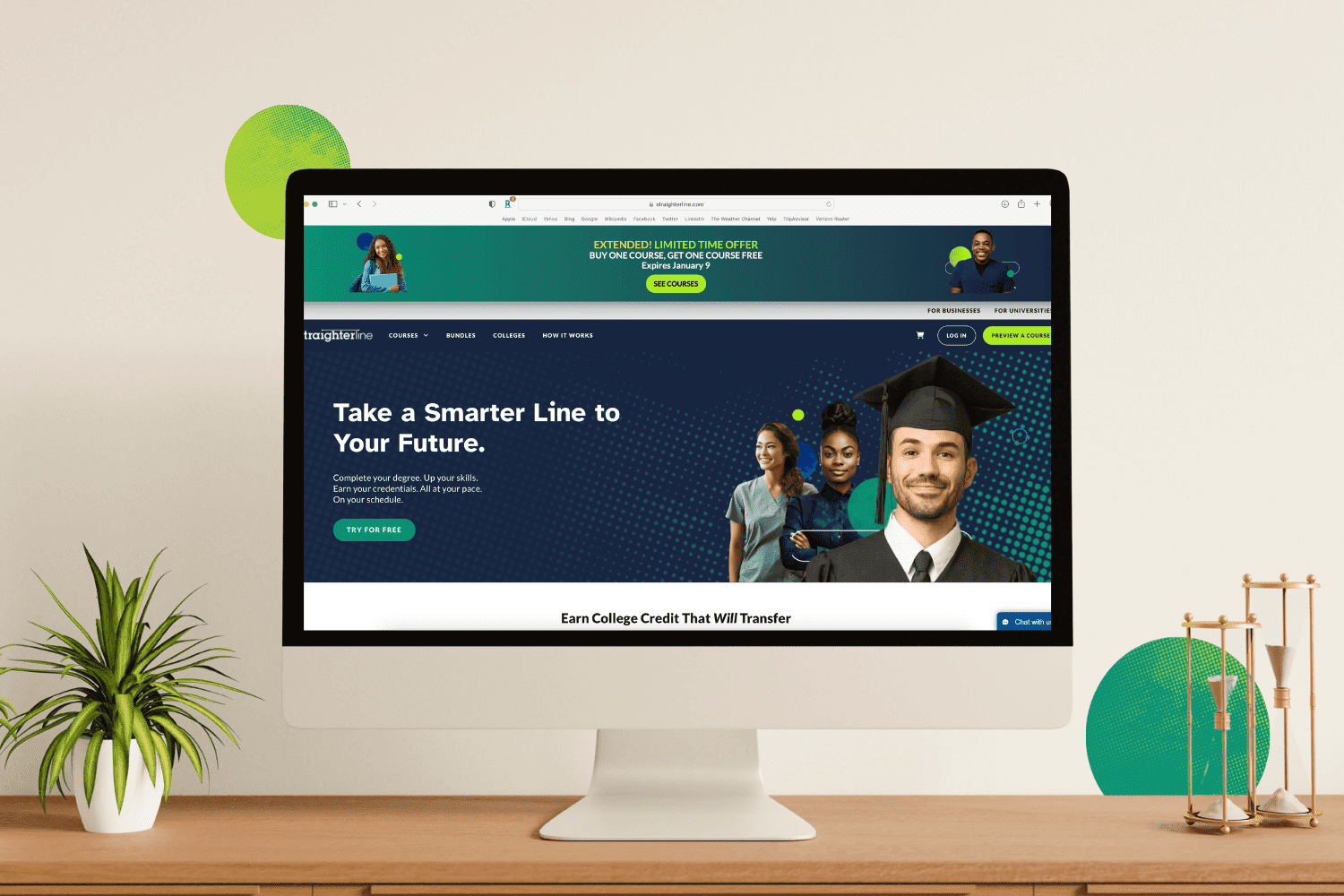
If you already hold a degree, you may have completed most of your general education courses and just need to complete your science or nursing prerequisites. That's where flexible, self-paced options can be a great option. StraighterLine's online nursing prerequisite courses let you complete courses like A&P or Microbiology, all on your own schedule.
Learn More: How Many Prerequisites Are Needed for Nursing?
5. Apply to Nursing School
Finishing your prerequisites is the first step, but nursing programs consider several factors when reviewing applications, including:
Prerequisite GPA
Overall GPA
Entrance exams, where required
Academic history
Application materials and essays
Healthcare experience, depending on the program
It's worth comparing a few programs to make the best decision. Look at accreditation, cost, format, clinical placement setup, graduation outcomes, and how well the program prepares students for licensure.
Learn More: Is It Hard to Get into Nursing School?
6. Complete Nursing School and Clinical Training
Once you're admitted, you can expect a different pace than the preparation phase. Starting nursing school is where your career transition really begins.
You'll complete courses like patient assessment, pharmacology, nursing practice, and medical-surgical nursing. Alongside your coursework, you'll complete supervised clinical rotations in real healthcare settings in specialties like pediatrics, obstetrics, mental health, and critical care so you graduate with a well-rounded view of what nursing looks like. Many programs also integrate skills labs and simulation training, giving you a more relaxed way to practice procedures before you're doing them with real patients.
This stage tends to be more structured and time-intensive than earlier coursework, since clinical hours are usually scheduled around hospital or facility availability rather than your own calendar. It's worth thinking ahead about logistics here — work schedules, childcare, commute time to clinical sites, and study time all tend to shift once clinicals start.
If you're still working while in nursing school, talk to your program early about how clinical scheduling works; a little planning now can save stress later, and most schools are familiar with supporting career-changing students to navigate this.
7. Earn Your Nursing License
After graduating from an approved program, aspiring RNs generally apply for licensure through their state board of nursing and sit for the NCLEX-RN, the national exam that tests whether you're ready to practice safely. Most programs build NCLEX preparation into your final semesters, and many students supplement that with review courses or practice question banks in the time leading up to test day.
Licensure requirements can vary by state — some boards ask for background checks, fingerprinting, or additional documentation on top of your exam results, so it's worth checking your specific state board's process early rather than waiting until graduation.
If you think you might want to work in a different state than the one you trained in, it's also worth looking into whether your state participates in the Nurse Licensure Compact (NLC), which allows RNs to hold one multistate license valid across participating states.
Once you've passed the NCLEX and met your state's requirements, you're officially a licensed nurse.
8. Start Applying for Nursing Positions
With your license in hand, you're ready for the job search. The skills you gained in your last career like communication, time management, problem-solving under pressure, and working with people can be a big asset in a hospital or clinic setting.
As you start applying, think about setting rather than just job title. New RNs work in hospitals, outpatient clinics, long-term care facilities, schools, and community health settings, and each offers a different pace and patient mix. Many new grads start in a hospital unit to build broad clinical experience before narrowing in on a specialty like pediatrics, oncology, or the ER.
It's worth asking instructors, clinical preceptors, and classmates for recommendations. Nursing programs tend to have strong alumni and hiring networks, and a warm introduction can go a long way. Wherever you start, know that your first nursing job doesn't have to be your last — it's simply your entry point into a field with a lot of room to grow.
How Long Does It Take to Change Careers to Nursing?
Generally, changing careers to nursing can take anywhere from about one to several years, depending on the credential you're pursuing, the credits you're bringing with you, remaining prerequisites, and whether you study full or part time.
If you already have transferable credits and only need a handful of prerequisites, you could reach nursing school faster than someone starting completely fresh. Some students with an unrelated bachelor's degree find an accelerated BSN program fits their timeline well, while others take the ADN route. Every program is a little different, so it's smart to treat any timeline as a range rather than a promise.
Learn More: How Fast Can You Become a Nurse? A Realistic Timeline
Is Nursing a Good Second Career?
For many people, yes! Nursing offers meaningful, hands-on work, specialties to grow into, and real demand for qualified nurses. It's also a field that rewards the discipline and life experience career changers often bring with them.
The biggest downsides are that nursing can be physically and emotionally demanding, may have unpredictable hours (depending on the setting), and comes with real education and clinical requirements before you're ready to practice.
Students who succeed tend to be drawn to patient care rather than just the idea of starting something new.
Ready to Start Your Career Change to Nursing?
You don't need to map out your entire transition today. Start by identifying the nursing role you want and researching a handful of programs that lead there. Then compare their prerequisite requirements against what you've already completed.
From there, things get a lot more specific: figure out which credits transfer, identify what's missing, build a realistic timeline, and start checking prerequisites off the list.
If prerequisites are the main thing standing between you and applying to nursing school, you can explore StraighterLine's nursing prerequisite courses.
They're built for exactly this moment: affordable, self-paced, and designed to fit around the career and life you already have. Many students find it's a low-risk way to make real progress that starts right now instead of next semester.
FAQs
Can I become a nurse with no healthcare experience?
Yes. Healthcare experience isn't universally required to start pursuing nursing. Requirements vary by school, so check with the programs you're considering to see whether they require or simply recommend prior experience.
Do I have to start college over to become a nurse?
Not necessarily. If you have previous coursework or a degree, some of it may transfer toward general education or prerequisite requirements. Each school decides what it will accept, so request a transcript evaluation early in your search.
Can I become a nurse with a bachelor's degree in another field?
Yes. Plenty of nursing students come from unrelated bachelor's degrees. Depending on your coursework, you might consider a traditional nursing program or an accelerated BSN built specifically for degree holders looking to switch fields.
What should I do first if I want to change careers to nursing?
Start by deciding which nursing credential fits your goals, then identify a few programs that lead there. Review their admissions and prerequisite requirements before you enroll in any additional coursework, so you're not taking classes you don't actually need.
Will online prerequisite courses actually transfer to my nursing program?
Often, yes — but policies vary by school. Courses like StraighterLine's are designed to align with common prerequisite requirements, and it's always a good idea to confirm acceptance with your intended nursing program before you enroll, just to make sure everything lines up smoothly.