





Is nursing school hard to get into? You've probably already heard that it can be competitive. What you might not have heard is this: most of the factors that determine whether you get in are ones you can actually influence. That's worth holding onto, because it means the work you do before you ever submit an application can make a real difference.
This article breaks down what nursing programs are looking for, where most applicants run into trouble, and how you can build the strongest possible application.
Quick Answer: Is Nursing School Hard to Get Into?
Nursing programs are competitive, but "hard to get into" means different things depending on where you apply, what type of program you're pursuing, and how strong your academic record is. Many programs receive more applications than they have available seats, but that doesn't mean the door is closed. What matters most is understanding what programs are looking for and preparing accordingly. GPA, prerequisite grades, and entrance exam scores tend to carry the most weight, and they’re all things you can work on.
Why Is Nursing School So Competitive?
Why Nursing Programs Have Limited Enrollment
The demand for nurses has grown steadily for years, which means more people are drawn to nursing careers than ever before. That's a good thing for the profession, but it also means programs have more applicants to choose from. At the same time, nursing programs can't simply expand enrollment at will. Clinical placements are limited, with only so many hospital rotations and supervised practice hours available in a given area. Faculty capacity, lab space, and accreditation requirements all create real limits on how many students can be admitted each cohort.
The result is that programs have to make careful selections among a pool of motivated, qualified applicants. Understanding why and what programs are weighing makes the whole process feel easier to navigate.
What Do Nursing Schools Look For?
Admissions criteria vary by nursing school, but most programs evaluate applicants on a fairly consistent set of factors.
GPA Requirements
GPA is almost always near the top of the list. Programs often have a minimum GPA requirement just to apply, and then a higher competitive GPA to actually get selected. Science GPA tends to matter even more than your cumulative GPA — more on that below.
Prerequisite Coursework
Prerequisite coursework is one of the most important parts of your application, and one that's often underestimated. Programs want to see that you've completed specific foundational courses and performed well in them. Biology, Anatomy & Physiology, Microbiology, Chemistry, Statistics, Psychology, and English Composition appear on most prerequisite lists.
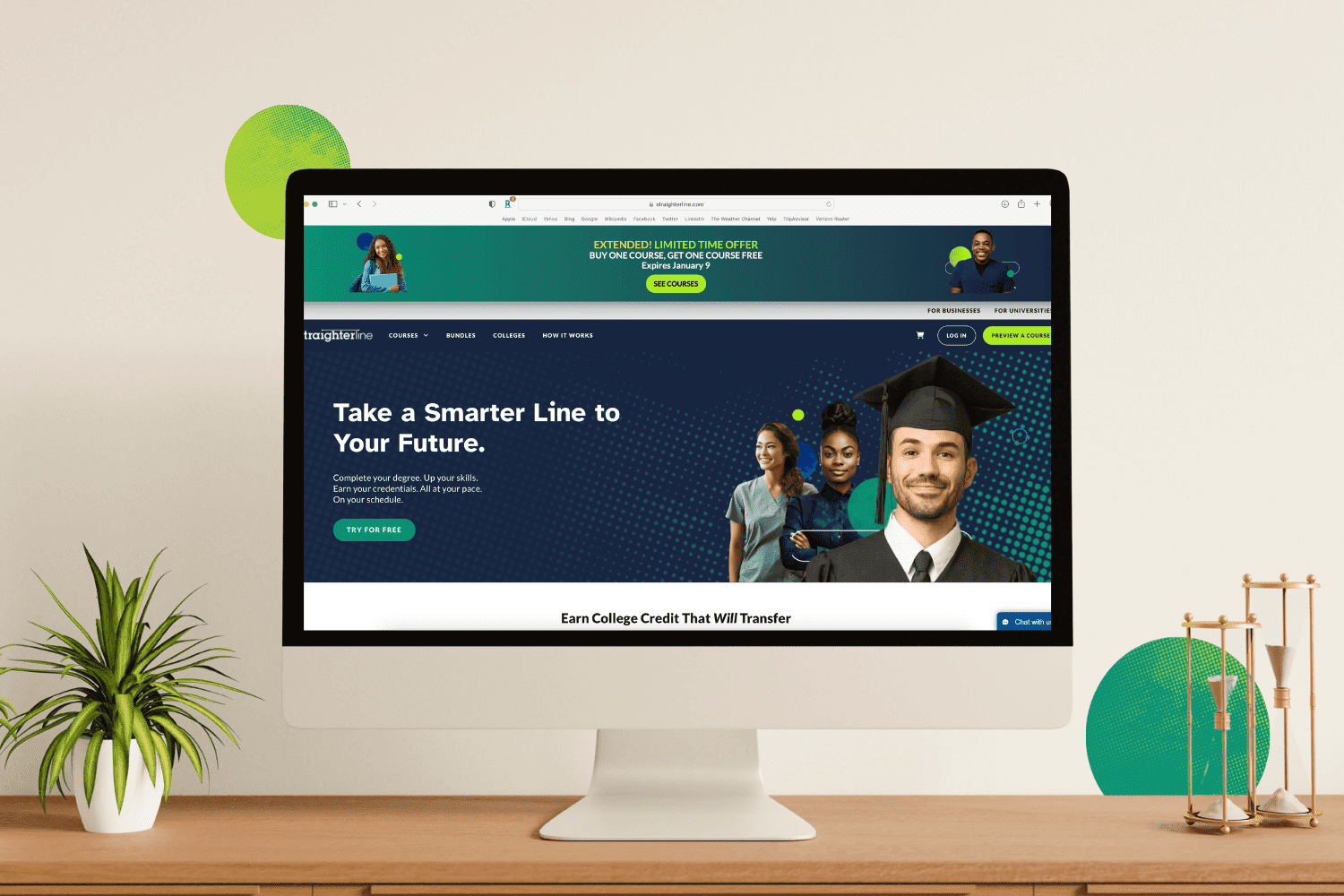
Did you know StraighterLine offers flexible, affordable online nursing prereq courses including Anatomy & Physiology I and II, Microbiology, and Pharmacology? They’re accepted at colleges and universities nationwide, including 180+ partner schools that transfer StraighterLine credits directly. Start preparing for your career in healthcare with StraighterLine.

Entrance Exams (TEAS & HESI)
Entrance exams like the TEAS (Test of Essential Academic Skills) or HESI A2 are required by many programs. These tests cover reading, math, science, and English language skills, and your score can meaningfully strengthen your application when you've prepared well.
Personal Statements, Recommendations & Healthcare Experience
Application materials including personal statements, recommendation letters, and sometimes interviews help round out the picture. Some programs also give weight to relevant healthcare experience, whether that's work as a CNA, EMT, medical assistant, or even volunteer time in a clinical setting.
GPA Questions, Answered
What GPA Do You Need?
There's no one-size-fits-all answer, but a GPA of 3.0 is often cited as a baseline minimum, with competitive applicants typically sitting closer to 3.5 or above. More selective BSN programs at larger universities may have student averages higher than that.
Here's something that surprises many prospective students: your science GPA often carries more weight than your overall GPA. Admissions committees want to see that you can handle courses like Anatomy & Physiology, Microbiology, and Chemistry because those subjects are foundational to everything you'll do in nursing school. Strong performance in your sciences sends a clear signal that you're ready.
If your science grades aren't quite where you'd like them to be, that's actually one of the more fixable parts of your academic profile. Retaking a course and earning a better grade is a recognized and legitimate path, especially when you can show genuine improvement.
StraighterLine's science prerequisite courses make it possible to do that on your own schedule, without having to wait for a traditional semester to start.
Can You Get Into Nursing School With a Low GPA?
It depends on how low your GPA is, where you're applying, and what the rest of your application looks like. Some programs use a points system that weighs multiple factors together, so a strong entrance exam score or relevant healthcare experience can help balance out a lower GPA. ADN (Associate Degree in Nursing) programs at community colleges also tend to have more flexible admissions criteria than BSN programs at four-year universities, which can make them a more accessible starting point for some students.
That said, the most effective long-term approach is to strengthen your academic record before applying rather than looking for programs that might overlook weaker grades. If prerequisite courses were a sticking point the first time around, revisiting them through a provider like StraighterLine gives you the opportunity to build genuine mastery, and a transcript that reflects it.
Why Prerequisites Are the Most Important Thing You Can Control
Common Nursing Prerequisites
Of all the admissions factors, prerequisite coursework may be the one students have the most direct influence over — and it's often the piece that makes or breaks an application.
Common prerequisites across most nursing programs include Anatomy & Physiology I and II, Microbiology, General Chemistry, English Composition, Statistics or College Math, and Introduction to Psychology. These courses aren't just boxes to check. Admissions committees look carefully at how you performed in each one, because your grades in these subjects are the clearest signal they have of how you'll handle nursing coursework itself.
StraighterLine courses in these subjects are built to genuinely prepare you for what comes next, while being flexible enough to work around a busy life. Whether you're working full-time, caring for family, or wrapping up another degree, completing your nursing prerequisite courses online through StraighterLine means you set the pace — and save thousands on tuition.
How to Give Yourself the Best Shot at Acceptance
Getting into nursing school isn't about luck — it's about preparation and planning. Here's where to focus your energy.
1. Research Program Requirements. Start by researching the specific programs you're interested in and noting their exact prerequisite and GPA requirements. Programs vary more than most people expect, and knowing what each one prioritizes helps you direct your effort wisely. Apply to a range of programs — including some with more accessible admissions criteria alongside your reach schools — and make sure every application is complete and submitted on time.
2. Take your entrance exam seriously. Strong TEAS or HESI scores can genuinely set you apart, and with the prep resources available today, there's no reason to go in underprepared. If you have any opportunity to gain healthcare experience before you apply it adds real depth to your candidacy. This also applies to volunteering!
3. Gain Relevant Healthcare Experience. Relevant healthcare experience can boost your application by showing admissions committees that you understand the realities of patient care and are committed to the profession. Roles such as Certified Nursing Assistant (CNA), Emergency Medical Technician (EMT), medical assistant, patient care technician, or even consistent volunteer work in a healthcare setting can help distinguish you from other applicants. While not every nursing program requires experience, it can provide valuable context for your personal statement and interviews while helping you build practical skills before nursing school.
4. Apply to a Balanced List of Schools. Avoid putting all your hopes on one or two highly competitive programs. Instead, create a balanced list that includes reach schools, target schools where your academic profile is competitive, and programs with more accessible admissions criteria. Applying broadly increases your chances of receiving an acceptance while giving you more options to compare tuition, location, clinical opportunities, and program format. Be sure to tailor each application to the school's specific requirements and submit all materials well before the deadline.
ADN vs. BSN: Does the Program Type Affect Your Chances?
Generally speaking, Associate Degree in Nursing (ADN) programs at community colleges tend to be somewhat more accessible than Bachelor of Science in Nursing (BSN) programs at four-year universities, though this depends on location and institution. Both pathways lead to RN licensure, and many nurses who start with an ADN go on to complete an RN-to-BSN bridge program later.
If you're earlier in your academic journey or building toward a stronger academic record, an ADN program can be a great entry point into the profession. If a BSN is your goal from the start, understanding what those programs value most and tailoring your application is the smartest path forward.
Common Reasons Applications Don't Move Forward
Most application setbacks come down to a handful of recurring issues: missing or incomplete prerequisites, weaker-than-expected science grades, incomplete application materials, underprepared entrance exam performance, or applying only to the most competitive programs without a broader strategy.
The encouraging thing about this list is that everything can be addressed. None of them are permanent, and most can be resolved with some time and intentional preparation before your next application cycle.
Thinking about applying to nursing school?
StraighterLine's online prerequisite courses let you complete the foundational coursework on your schedule, at a fraction of traditional tuition costs. Plus, credits are accepted at nursing schools nationwide.
Explore StraighterLine’s nursing prerequisite courses to get started →
FAQs
Is nursing school harder to get into than other majors?
Nursing programs tend to be more competitive than many general undergraduate programs, largely because of clinical capacity limits and specific academic benchmarks. That said, the criteria are clear and the requirements are achievable — students who plan ahead and prepare carefully are well-positioned to succeed.
What GPA do nursing schools look for?
Most programs have a minimum GPA of around 3.0 to be considered, with competitive applicants often closer to 3.5 or above. Your science GPA — particularly in Anatomy & Physiology, Microbiology, and Chemistry — tends to carry the most weight.
Can I get into nursing school with a low GPA?
Yes, depending on the program and the rest of your application. Some schools use a holistic review process that considers exam scores, healthcare experience, and other factors alongside GPA. Strengthening your academic record — especially by doing well in prerequisite science courses — is the most effective way to improve your chances.
Do nursing schools require entrance exams?
Many do. The TEAS and HESI A2 are the most widely used. Requirements vary by program, so it's worth checking each school's specific criteria early and giving yourself plenty of time to prepare.
What are the most important nursing prerequisites?
Anatomy & Physiology I and II, Microbiology, and General Chemistry tend to carry the most weight, since they speak directly to your readiness for nursing coursework. English Composition, Statistics, and Psychology are also commonly required. StraighterLine offers affordable, flexible online courses in all of these subjects, accepted at hundreds of partner institutions.