





One of the biggest advantages of homeschooling is the freedom to build an education around a student's individual needs, interests, and learning pace. And as students approach high school graduation, that flexibility can extend to college preparation, too.
Today, college credit options for homeschool learners go well beyond traditional dual enrollment programs. Students may be able to earn college credit through online courses, standardized exams, community colleges, and other pathways that recognize college-level learning.
But with more choices comes an important question: Which options are actually worth pursuing?
The answer depends on your student's academic readiness, future college plans, and how different institutions recognize the credits they earn. Here's how homeschool families can explore their options and build a practical plan for getting a head start on college.
Can Homeschool Students Earn College Credit Before Graduating?
Yes, homeschool students can potentially earn college credit while completing their high school education, just like students attending traditional public or private schools.
The difference is that homeschool families may need to take a more active role in researching programs, confirming eligibility, and documenting coursework.
Common pathways include:
- Dual enrollment through community colleges or universities
- Advanced Placement (AP) exams
- College-Level Examination Program (CLEP) exams
- Self-paced online college courses
- International Baccalaureate (IB) programs, where accessible
- College credit awarded through prior learning assessments
Each option has different requirements, costs, and methods for awarding credit. Understanding those differences can help families choose opportunities that fit their student's goals.
1. Dual Enrollment Through Community Colleges and Universities
Dual enrollment allows eligible high school students to take college courses before graduating.
For homeschool families, community colleges are often a practical place to start. Many institutions offer enrollment opportunities for homeschool students, although requirements vary by state and school.
Students may take courses online or on campus, depending on availability.
One advantage of dual enrollment is that successfully completed courses generally appear on an official college transcript, providing a record of college-level academic work.
However, families should research eligibility requirements, tuition costs, placement testing, and any restrictions on homeschool participation. Some states subsidize dual enrollment for eligible students, while others require families to pay some or all associated costs.
2. Advanced Placement Exams
Homeschool students don't necessarily need to attend a traditional high school AP class to take an AP exam.
Students can prepare independently using textbooks, online resources, or a homeschool curriculum aligned with AP course content. They then arrange to take the exam at a participating school or authorized testing location.
AP exams are scored from 1 to 5, and colleges establish their own policies for awarding credit or placement based on exam results.
For families considering this route, planning ahead is important. Homeschool students generally need to coordinate with an AP testing school well before the exam date.
You can explore available exams and testing information through College Board's AP program.
3. CLEP Exams
For students who already have a strong understanding of a subject, CLEP offers another way to demonstrate college-level knowledge.
The College-Level Examination Program allows students to take exams in subjects such as:
- College Composition
- College Mathematics
- Biology
- Psychology
- Sociology
- U.S. History
- Business
Rather than completing an entire college course, students demonstrate what they know through an exam. This can be particularly appealing for homeschool learners who have studied a subject extensively or progressed beyond traditional grade-level expectations.
However, CLEP credit is not automatic. Colleges determine which exams they accept, qualifying scores, and how credits apply toward a degree.
Before scheduling an exam, review the policies of prospective colleges through College Board's CLEP resources.
4. Self-Paced Online College Courses
Self-paced online courses offer homeschool students an opportunity to complete college-level coursework outside a traditional semester schedule. This can work well for families who prefer to organize learning around individual progress rather than fixed class times.
Depending on the provider, students may be able to:
- Study outside traditional school hours
- Work through material at an individualized pace
- Complete coursework from home
- Access subjects unavailable through local programs
- Begin courses at different points during the year
Some courses award credit directly through a college, while others carry independent credit recommendations.
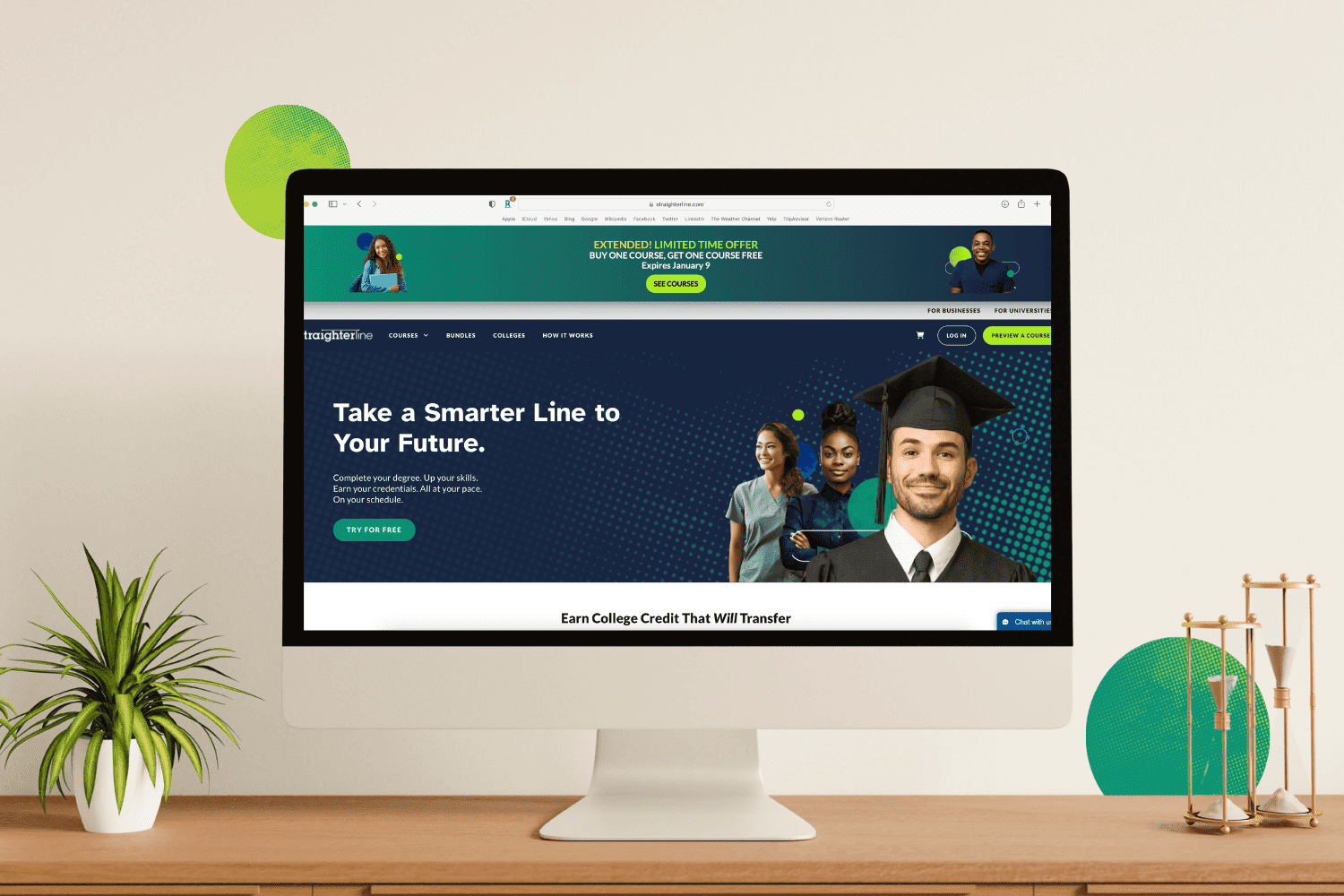
For example, StraighterLine offers affordable, self-paced online courses across common college subjects, with many courses carrying American Council on Education (ACE) credit recommendations.
For eligible homeschool students, this can provide another way to pursue college-level coursework while maintaining a flexible learning schedule. Before enrolling, families should confirm the provider's eligibility requirements and determine whether prospective colleges will accept the specific coursework.

5. Credit for Prior Learning and Competency-Based Options
Not all college-level learning happens in a classroom.
Some colleges offer credit for prior learning, which allows students to demonstrate knowledge or skills they've developed through experiences outside traditional coursework.
Depending on the institution, these opportunities may include:
- Departmental challenge exams
- Portfolio assessments
- Industry certifications
- Demonstrations of specific competencies
- Approved prior learning evaluations
For example, a homeschool student who has developed advanced programming skills through independent projects may eventually be able to demonstrate that knowledge through a college's approved assessment process.
However, these opportunities are highly institution-specific. Some colleges limit prior learning assessments to enrolled students or require students to meet particular eligibility criteria. Families interested in this pathway should research the policies of colleges their students may attend rather than assuming independently developed skills will automatically qualify for credit.
How Do These College Credit Options Compare?
Each pathway offers a different balance of structure, flexibility, and credit recognition.
| Option | How Credit Is Earned or Recommended | Key Consideration |
|---|---|---|
| Dual enrollment | Completing college courses | Eligibility and tuition policies |
| AP exams | Qualifying exam scores | College-specific score requirements |
| CLEP exams | Demonstrating subject knowledge | Accepted exams and qualifying scores |
| Self-paced online courses | Completing eligible coursework | Provider and transfer policies |
| Prior learning assessment | Demonstrating existing knowledge | Availability at prospective colleges |
The best approach may involve more than one option. A student could use dual enrollment for subjects that benefit from instructor interaction while exploring examination-based credit for material they've already mastered.
How Should Homeschool Families Choose College Credit Courses?
With several pathways available, the next step is deciding which subjects make sense.
Start With General Education Requirements
Many colleges require students to complete foundational coursework in subjects such as English, mathematics, science, humanities, and social sciences. These subjects can provide a useful starting point for families researching potential college credit.
However, general education requirements vary, so a course that satisfies one college's requirements may count differently at another.
Consider Your Student's Interests
If your student is interested in engineering, healthcare, business, or another specialized field, look at the introductory requirements for those programs. Some majors have specific prerequisite sequences that can influence which courses are most useful to complete early.
Avoid Overloading the Schedule
College-level coursework requires time and effort, even when a student is academically advanced. Consider how additional courses will fit alongside high school requirements, extracurricular activities, work, and family commitments. The goal should be meaningful academic progress, not simply accumulating the highest number of credits.
How Can Homeschool Students Document College-Level Coursework?
Documentation is an important part of homeschool college planning, especially when students complete coursework through multiple providers.
Families should maintain organized records of:
- Course titles and descriptions
- Grades and completion dates
- Credits or credit recommendations
- Official college transcripts
- Exam score reports
- Relevant syllabi or learning objectives
It's also important to distinguish between high school credit and college credit.
A parent may document eligible coursework on a homeschool transcript according to applicable state requirements, but that doesn't automatically mean a college will award academic credit for the same course.
Colleges may require official records directly from the institution, testing organization, or alternative credit provider. Keeping these documents organized can make the application and credit evaluation process easier later.
When Should Homeschool Students Start Earning College Credit?
There isn't one ideal age or grade level for every student.
Some homeschool learners are ready for introductory college coursework relatively early, while others benefit from completing more high school material first. Academic readiness, independence, and interest should guide the decision.
Before getting started, consider whether your student:
- Has a strong foundation in the subject
- Can manage independent assignments
- Understands the expectations of college-level coursework
- Has enough time to study consistently
- Meets the program's eligibility requirements
Starting with one manageable course or exam can help families evaluate whether additional college-level work makes sense.
Frequently Asked Questions About College Credit for Homeschool Learners
What are the best college credit options for homeschool learners?
Common options include dual enrollment, AP exams, CLEP exams, self-paced online college courses, and prior learning assessments. The best choice depends on academic readiness, cost, scheduling needs, and prospective college policies.
Can homeschool students take college courses online?
Yes. Many colleges and alternative education providers offer online courses for eligible high school students. Enrollment requirements and credit recognition vary by institution and provider.
Can homeschool students earn college credit without dual enrollment?
Yes. AP and CLEP exams, eligible online courses, and certain prior learning assessments may provide alternative pathways toward college credit.
Do homeschool college credits transfer to any college?
No. Each receiving institution determines which credits or credit recommendations it accepts and how they apply toward degree requirements.
Can homeschool students graduate college earlier by earning credits in high school?
Potentially. If credits are accepted and satisfy degree requirements, students may have fewer courses remaining after enrolling. Actual graduation timelines depend on the college, major, and required course sequence.
Get a Head Start on College With StraighterLine
Exploring college credit options for homeschool learners is about finding opportunities that complement your student's education and prepare them for what comes next.
Whether your family chooses dual enrollment, exam-based credit, online coursework, or a combination of approaches, start with your student's goals and research how prospective colleges recognize each option.
If your homeschool plan could benefit from more scheduling flexibility, explore StraighterLine's online course catalog.
With affordable, self-paced courses across common college subjects and a history of credit acceptance at 3,000+ colleges and universities, StraighterLine offers eligible homeschool learners another way to begin college-level coursework while maintaining the flexibility that works for their families.