





For homeschool families, planning for college can come with a unique set of decisions. Without a traditional high school course catalog or guidance counselor to map out the next steps, parents and students often have more freedom to choose how and when to introduce college-level coursework.
Two options worth considering are dual enrollment and self-paced online college courses. Both can give homeschool students a head start on college, but they differ in how courses are structured, how credits are awarded, and how much flexibility families have.
So, which is the better fit? The answer depends on your student's academic readiness, learning preferences, schedule, budget, and future college plans. Here's how to compare the options and choose a path that makes sense for your family.
What Is Dual Enrollment for Homeschool Students?
Dual enrollment allows eligible high school students to take college-level courses while they're still completing their high school education.
For homeschool students, this typically means enrolling in courses through a participating community college, university, or approved dual enrollment program.
Depending on the institution, students may attend classes:
- On a college campus
- Online with scheduled deadlines
- Through a virtual or hybrid program
- As part of a designated homeschool dual enrollment pathway
Students who successfully complete these courses generally earn college credit from the institution offering them. Families may also be able to count the coursework toward high school graduation, depending on applicable homeschool requirements and how they document their curriculum.
However, dual enrollment eligibility varies by state and institution. Some colleges have specific policies for homeschool applicants, including age restrictions, placement testing, GPA requirements, or documentation of academic readiness.
What Are Self-Paced Online College Courses?
Self-paced online college courses allow students to complete college-level coursework without attending classes at regularly scheduled times.
Instead of following a traditional semester calendar, students generally work through lessons and assessments at a pace that fits their schedule, subject to the provider's completion deadlines and course requirements.
This approach can be particularly appealing to homeschool families who already structure learning around individual progress rather than fixed academic calendars. However, not all self-paced courses award credit in the same way. Some are offered directly by accredited colleges, while others are provided by alternative education providers whose courses may carry independent college credit recommendations.
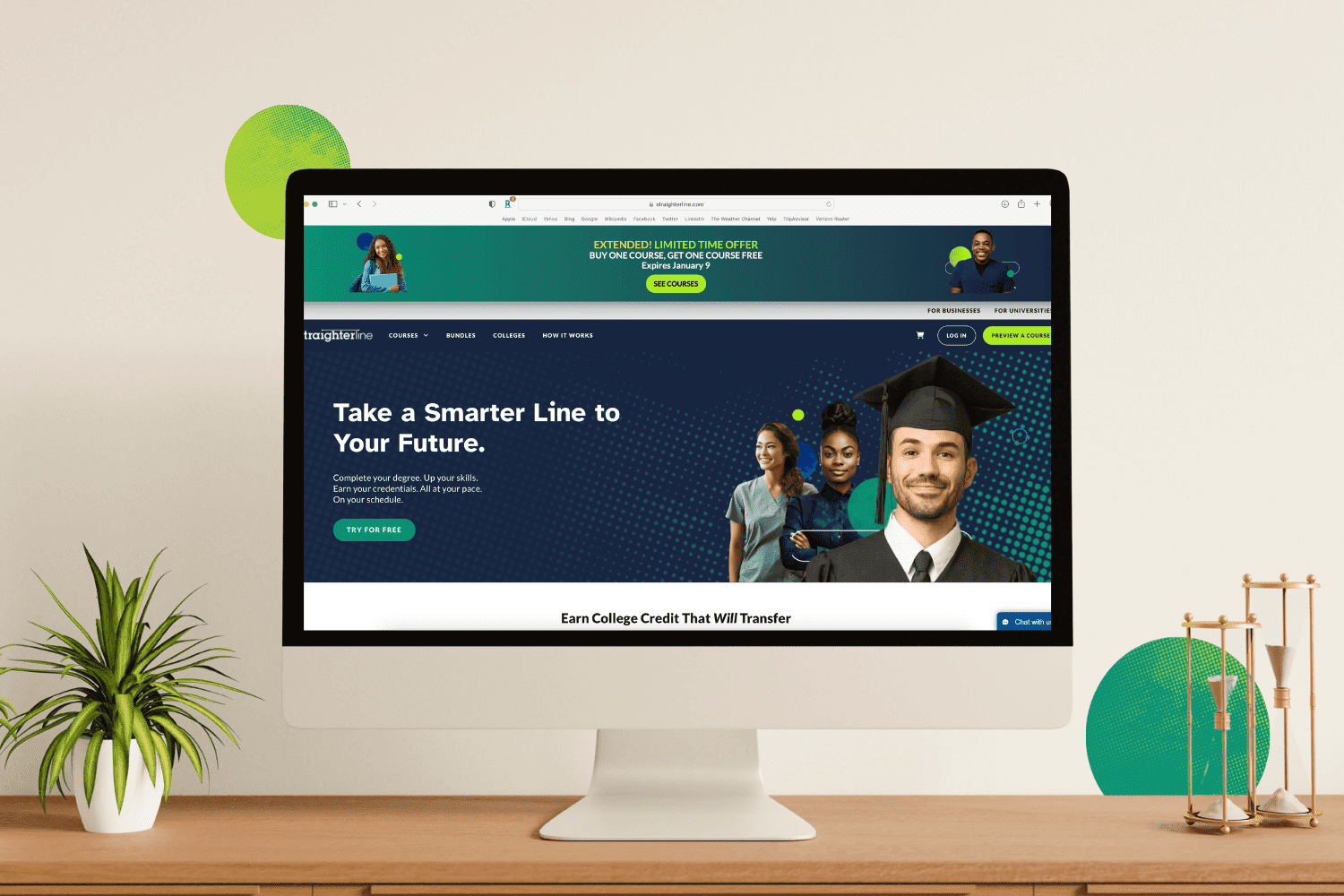
For example, StraighterLine offers self-paced online college courses, many of which carry American Council on Education (ACE) credit recommendations. These recommendations can be considered by colleges when evaluating eligible coursework for credit.
Understanding where the credit comes from is an important part of comparing these options.

Dual Enrollment vs. Self-Paced Online College Courses: Key Differences
Both pathways can introduce homeschool students to college-level learning, but the experience can look quite different.
| Factor | Dual Enrollment | Self-Paced Online College Courses |
|---|---|---|
| Learning format | Campus-based, online, or hybrid | Typically fully online |
| Schedule | Usually follows an academic calendar | More flexible pacing |
| Credit | College credit awarded by the institution | College credit or credit recommendations, depending on provider |
| Eligibility | Often includes age, grade, GPA, or placement requirements | Provider-specific eligibility and prerequisites |
| Cost | May be discounted or subsidized | Varies by provider and course |
| Instruction | Typically instructor-led | Varies; often more independent |
| Transferability | Determined by receiving college | Determined by receiving college |
| Best suited for | Students seeking a structured learning experience | Students needing scheduling flexibility and independent pacing |
Neither option is automatically better. The right choice depends on your student’s own unique needs.
5 Factors Homeschool Families Should Consider
Before choosing a program, consider how each option fits your student's current learning environment and longer-term goals.
1. How Much Structure Does Your Student Need?
Some students thrive with established class schedules, regular instructor interaction, and firm assignment deadlines. Dual enrollment can provide that structure while introducing students to the expectations of a traditional college environment. Other students are comfortable managing their own progress and prefer working independently.
Self-paced courses may be a better match for students who:
- Prefer moving through material at their own speed
- Have strong time-management skills
- Need flexibility around other commitments
- Learn well through independent study
Neither learning preference is inherently better. What matters is choosing an environment where your student can succeed.
2. How Does Each Option Fit Your Homeschool Schedule?
One advantage of homeschooling is the ability to build an academic schedule around your student's needs. Dual enrollment may introduce fixed class times, semester deadlines, and additional scheduling commitments. This type of structure can work well for some families, but it may be challenging for students balancing athletics, extracurricular activities, travel, work, or other responsibilities.
Self-paced courses offer greater control over when coursework happens. For example, a student might dedicate mornings to homeschool subjects and afternoons to online college coursework, or adjust their study schedule around other commitments. The trade-off is that greater flexibility also requires greater accountability. Without regular class meetings, students need to manage their own progress.
3. What Will Each Option Actually Cost?
Cost is another important consideration, and the more affordable choice isn't always obvious.
Some states and colleges offer free or reduced-cost dual enrollment programs for eligible students. Others charge tuition, course fees, textbooks, or additional expenses. Homeschool students may also face different eligibility or funding rules than students attending traditional public high schools.
When comparing costs, consider:
- Tuition or course fees
- Textbooks and learning materials
- Technology requirements
- Transportation, if attending on campus
- Exam or proctoring fees
- Any available state funding or tuition discounts
Self-paced online courses may offer a lower-cost alternative, particularly when families aren't eligible for subsidized dual enrollment. However, compare the full cost of each option rather than assuming one format will always be more affordable.
4. How Will Colleges Evaluate the Credits?
This is one of the most important differences between the two pathways.
With traditional dual enrollment, students generally earn credit directly from a college or university. That coursework becomes part of their college academic record.
With alternative online education platforms, students may complete courses that have been independently evaluated and recommended for college credit rather than receiving credit directly from a college.
For example, The American Council on Education (ACE) reviews certain nontraditional learning experiences and recommends college credit when they meet established standards. Thousands of colleges look for ACE recommendations when deciding how to evaluate courses from alternative education providers for credit.
That said, an ACE credit recommendation isn't the same as college credit automatically awarded by an accredited institution. Colleges establish their own policies for accepting both traditional transfer credits and alternative credit recommendations.
Before enrolling, families should research the policies of prospective colleges and ask how the specific coursework would apply toward a future degree.
5. What Is Your Student's Long-Term Academic Goal?
A student who already knows which college they want to attend may benefit from a different strategy than someone still exploring their options.
For example, if your student plans to attend a particular state university, a community college dual enrollment program with an established transfer agreement may offer a clearer pathway.And, if your student hasn't selected a college or major, flexibility may be a higher priority.
Either way, think about the purpose of the coursework.
Is your student trying to complete a prerequisite, explore a potential major, strengthen academic skills, or begin working toward general education requirements?
That answer should guide the course selection process.
Can Homeschool Students Use Both Options?
Yes. Homeschool families don't necessarily have to choose between dual enrollment and self-paced online college courses. Depending on eligibility and academic goals, students may be able to combine both approaches.
For example, a student might take a semester-based science course through a local community college while completing an eligible online humanities course independently. This can allow families to use different learning formats for different subjects.
A blended approach may make sense when:
- A required course isn't available through a local college
- A student wants more structure for one subject and flexibility for another
- Dual enrollment enrollment limits restrict how many courses a student can take
- The family wants to spread college-level coursework across the year
Just be careful not to overload the student's schedule. Combining pathways works best when each course serves a clear academic purpose.
How to Choose the Right Courses for Your Homeschool Student
Once you've decided which learning format makes sense, the next question is what to study.
For students who haven't selected a college major, introductory subjects may offer a useful starting point.
Potential options include:
These subjects commonly appear in college general education curricula, although requirements vary by institution and program. Students considering specialized majors, such as nursing or engineering, should pay particular attention to prerequisites and program-specific course requirements.
A course that fulfills a general education requirement for one degree may not satisfy the requirements of another. Rather than selecting courses solely because they're available, families should compare them against the requirements of colleges their students are considering.
A Practical Checklist Before Enrolling
Whether you're exploring dual enrollment or self-paced coursework, use these questions to guide your decision.
- Eligibility: Does my student meet the program's age, academic, and enrollment requirements?
- Academic readiness: Is my student prepared for the difficulty and independence of college-level coursework?
- Learning format: Will the course structure work with our homeschool schedule?
- Cost: What is the total price, including materials and fees?
- Credit recognition: Who awards the credit, or is the coursework recommended for credit?
- College acceptance: Will prospective colleges accept the course, and how might it apply toward a degree?
- Documentation: What official transcript, score report, or other record will be available after completion?
For homeschool families, it's also worth checking applicable state homeschool requirements to determine how outside coursework should be documented on a high school transcript.
Frequently Asked Questions About College Courses for Homeschool Students
Can homeschool students participate in dual enrollment?
Yes. Many colleges offer dual enrollment opportunities for eligible homeschool students. Admission requirements, funding, and available courses vary by state and institution.
Are self-paced online college courses considered dual enrollment?
Not necessarily. Dual enrollment generally involves taking college courses while enrolled in high school, often through a formal college program. Self-paced online courses may be offered by colleges or alternative providers and don't automatically qualify as traditional dual enrollment.
Which option is cheaper for homeschool students?
It depends. Subsidized dual enrollment may be free or significantly discounted, while self-paced online courses may offer competitive pricing for families without access to those programs. Compare total costs before enrolling.
Do colleges accept online credits earned by homeschool students?
Some do. Acceptance depends on the institution, course provider, credit documentation, and the receiving college's policies. Confirm requirements with prospective colleges before enrolling.
Can homeschool students take college courses before choosing a major?
Yes. Students can explore introductory subjects or potential general education requirements before deciding on a major. However, the way those courses apply to a future degree will depend on the college and program.
Earn College Credit With StraighterLine
If your family needs a flexible alternative to semester-based coursework, explore StraighterLine's online course catalog.
With affordable, self-paced courses across common college subjects and a history of credit acceptance at 3,000+ colleges and universities, StraighterLine offers eligible homeschool students another way to pursue college-level learning without giving up the flexibility that makes homeschooling work for their families.