





Thinking about returning to college after a break? Whether it's been two years or twenty, getting started again can feel like a big undertaking. You might be wondering whether your old credits still count, how you'll balance classes with your current responsibilities, or whether you can afford to go back to school.
The good news is that you don't have to figure everything out at once.
Returning to college after a break starts with a few manageable steps:
- Reviewing your previous coursework
- Identifying which credits you still need
- Finding a learning option that fits your budget and schedule
- Building a realistic plan for earning credits again
And you don't necessarily need to wait until the next semester to begin. With the right approach, you can use the next 30 days to get organized, choose a course, and start making progress toward your degree.
Here's how to turn the idea of going back to college into a plan you can actually follow.
Can You Go Back to College After Taking Time Off?
Yes! Many colleges welcome students who previously attended college but never completed their degrees, as well as adults starting college for the first time.
Your path back will depend on where you left off.
If you're returning to your previous college, you may need to apply for readmission. If you're enrolling somewhere new, you'll likely need to complete an application and have your previous transcripts evaluated.
You may also have options beyond immediately enrolling in a full degree program. For example, some students begin by completing one online college course to rebuild their study habits and confidence before committing to a larger course load.
The important thing is finding a starting point that fits your current circumstances.
Your 30-Day Plan for Returning to College
Getting back into school doesn't have to mean making a major commitment on day one.
This four-week plan breaks the process into smaller steps, from understanding your academic history to getting started with your first course.
| Timeline | Your Focus | Your Goal |
|---|---|---|
| Days 1-7 | Review your academic history | Understand where you left off |
| Days 8-14 | Research your options | Identify a realistic path forward |
| Days 15-21 | Choose a course and create a schedule | Prepare to start learning |
| Days 22-30 | Begin coursework | Make measurable academic progress |
Completing a full course within 30 days may be possible with some self-paced online options, but it isn't guaranteed. Your timeline will depend on the course, your available study time, and any enrollment or transfer requirements.
Week 1: Find Out Where You Stand (Days 1-7)
Before choosing a new course, figure out what you've already accomplished. Even if you attended college years ago, your previous coursework may still be valuable.
Day 1-2: Request Your Old College Transcripts
Start by contacting any colleges or universities you've previously attended.
Request official transcripts or access your unofficial academic records so you can review:
- Courses completed
- Credits earned
- Grades received
- Previous major or degree program
- Any outstanding academic requirements
Do college credits expire? Generally, college credits remain on your academic record. However, individual schools may limit how older coursework applies to current degree requirements, especially in subjects that change over time.
Don't assume you'll need to start over simply because you've been away from school.
Day 3-4: Revisit Your Degree Goals
Think about why you want to return.
Are you hoping to:
- Finish a degree you previously started?
- Qualify for new career opportunities?
- Change careers entirely?
- Complete prerequisites for another program?
- Pursue a personal goal?
Your reason for returning can help you decide which courses and programs make sense. If your career goals have changed since you last attended college, you may want to explore a different major or degree pathway.
Day 5-7: Identify What's Missing
Once you've reviewed your previous coursework, compare it with the requirements of the degree you're considering.
If you already know where you want to enroll, ask an academic advisor for a degree audit or preliminary transfer credit evaluation. This can help you identify outstanding general education courses, prerequisites, electives, or major requirements.
By the end of week one, you should have a clearer picture of your academic starting point.
Week 2: Find a College Path That Fits Your Life (Days 8-14)
Returning to college as an adult often looks different from attending right after high school. You may be working full-time, raising a family, or managing financial responsibilities that weren't part of your life the first time around.
Your education plan needs to account for those realities.
Day 8-10: Explore Your Learning Options
Consider whether you want to return to a traditional college or begin with a more flexible approach.
Your options may include:
- Traditional college courses: Semester-based classes offered on campus or online
- Part-time enrollment: A smaller course load that may be easier to balance with work
- Self-paced online courses: Coursework you can complete according to your schedule, subject to provider deadlines
- Community college: Potentially lower-cost courses that may transfer toward a bachelor's degree
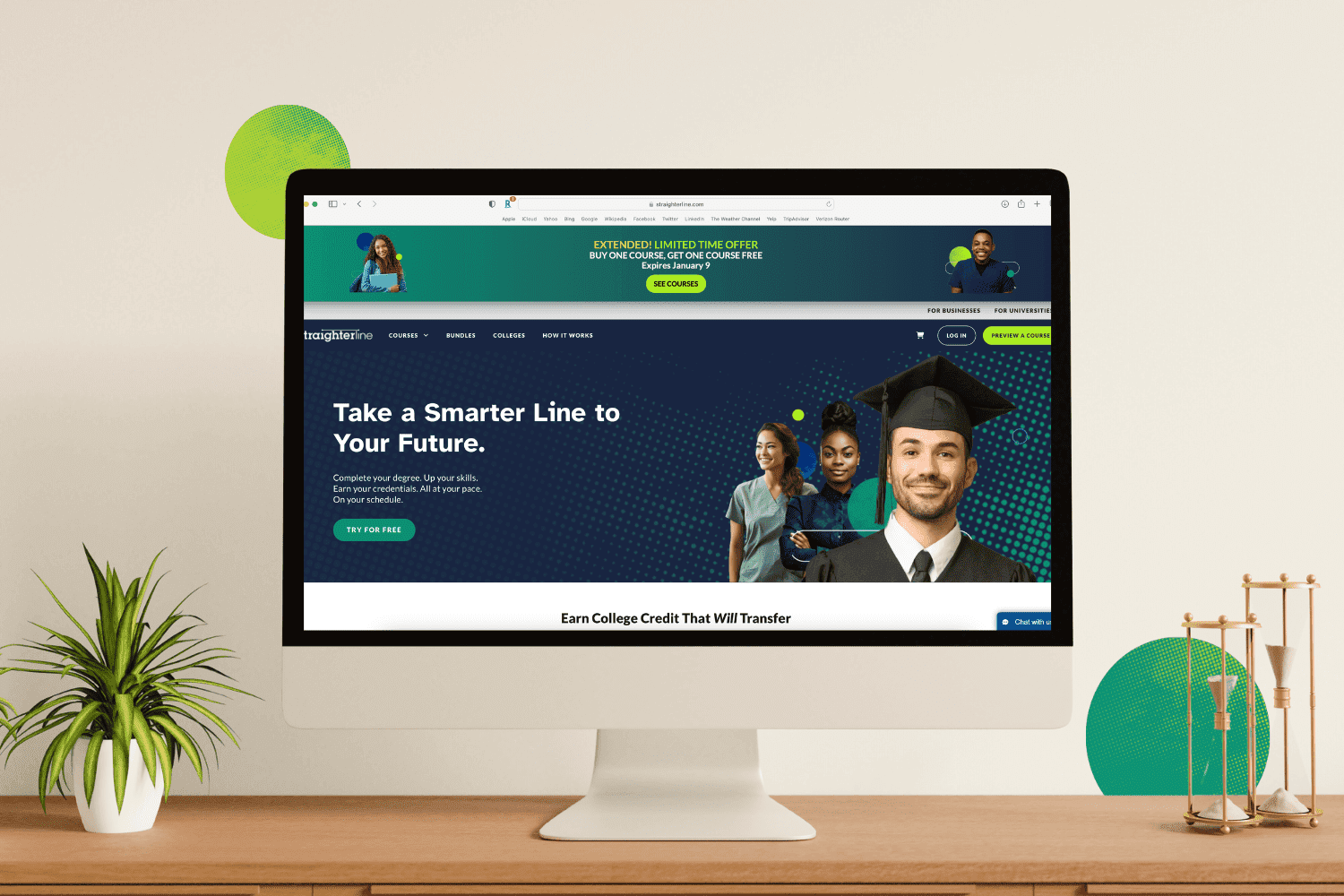
For students who want to begin with one manageable course, StraighterLine offers affordable, self-paced online college courses across common general education subjects. This can be a practical option if you're not ready to commit to a full semester but want to begin working toward eligible college requirements.

Day 11-12: Calculate Your Budget
Before enrolling, determine how much you can realistically spend.
Consider:
- Tuition and course fees
- Textbooks and learning materials
- Technology expenses
- Transportation, if applicable
- Financial aid or employer tuition benefits
If you're returning to a college or university, research scholarships, grants, and other financial aid opportunities.
You can also complete the Free Application for Federal Student Aid (FAFSA) to determine eligibility for federal student aid at participating institutions.
If you're considering an alternative course provider, check whether its courses qualify for financial aid or require direct payment.
Day 13-14: Confirm Your Credits Will Count
Before choosing an outside course, verify whether your intended college will accept it.
Ask specifically:
"Will this course satisfy a requirement in my degree program?"
A course may be accepted for transfer but count only as an elective rather than fulfilling the requirement you intended. Getting confirmation before enrolling can help you avoid spending time and money on unnecessary coursework.
Week 3: Choose Your First Course and Build a Routine (Days 15-21)
By now, you should have a better understanding of your academic goals, available options, and budget. It's time to turn that information into a manageable commitment.
Day 15-17: Choose One Course to Start
You don't need to sign up for several classes immediately. Starting with one course can help you adjust to studying again without overwhelming your schedule.
Consider choosing a course that:
- Satisfies a confirmed degree requirement
- Builds on knowledge you already have
- Fits your current academic readiness
- Has a manageable workload
- Offers a learning format you can maintain
For example, if you still need a general education requirement in psychology, English composition, or mathematics, completing an eligible course could help you make progress while rebuilding your academic routine.
Day 18-19: Create a Weekly Study Schedule
One of the biggest adjustments when returning to college after a break is finding time to study. Rather than relying on whatever free time appears during the week, set aside specific study blocks.
For example:
| Day | Study Time |
|---|---|
| Monday | 7-8 p.m. |
| Tuesday | 7-8 p.m. |
| Wednesday | Break |
| Thursday | 7-8 p.m. |
| Saturday | 9 a.m.-12 p.m. |
| Sunday | 10-11 a.m. |
| Total | 7 hours |
This is only an example. Some courses may require considerably more time, depending on the subject and your academic background. The goal is to build a routine you can follow consistently.
Day 20-21: Prepare Your Learning Environment
Before your course begins, make sure you have what you need.
That might include:
- A reliable computer and internet connection
- Access to course materials
- A quiet place to study
- A calendar for tracking assignments
- Any required software or technology
Small preparations can help you spend less time troubleshooting and more time learning.
Week 4: Start Earning College Credit Again (Days 22-30)
You've reviewed your academic history, explored your options, and created a schedule. Now comes the most important part: getting started.
Day 22-24: Enroll and Begin Your Coursework
If you've identified an appropriate course and confirmed how it fits your academic plan, take the next step and enroll.
Review the syllabus, grading policies, assessments, and course completion requirements.
Then begin working through the material. You don't need to finish everything immediately. Your first goal is to establish momentum.
Day 25-27: Complete Your First Learning Milestones
Set a specific, achievable target for your first few days.
Depending on the course, that might mean:
- Completing the first module
- Finishing an introductory assignment
- Taking a practice assessment
- Reviewing foundational material
- Creating notes for an upcoming exam
Focus on measurable progress rather than trying to rush through the material.
Day 28-30: Review Your Progress and Plan What's Next
At the end of the month, evaluate how your new routine is working.
Ask yourself:
- Did I stick to my study schedule?
- Was the coursework manageable?
- Do I need more study time?
- What obstacles came up?
- What should I adjust next month?
If you've completed a course, find out how to request the appropriate transcript or credit documentation. If you're still working through it, identify your next milestone and continue.
The goal of the first 30 days isn't necessarily to finish a course. It's to move from thinking about college to actively working toward your degree.
What If You're Nervous About Returning to College?
It's normal to have questions about going back to school, especially if you've been away from academics for several years. You may worry about keeping up with coursework, managing technology, or finding enough time to study.
One way to make the transition easier is to start with a smaller commitment. Instead of immediately enrolling in four classes, consider beginning with one course that fits your schedule and academic goals.
You can also look for learning options that provide tutoring, academic resources, or other support when you need help.
Returning to college doesn't require you to study the same way you did years ago. It requires finding an approach that works for your life now.
Frequently Asked Questions About Returning to College After a Break
How do I go back to college after a long break?
Start by requesting transcripts from your previous colleges, identifying your current degree goals, and researching schools or courses that fit your needs. You may need to apply for readmission or transfer, depending on where you plan to enroll.
Can I use college credits from 10 or 20 years ago?
College credits generally remain on your academic record, but schools determine whether older coursework satisfies current degree requirements. Some programs have time limits for certain prerequisites.
Can I return to college without taking a full course load?
Yes! Many colleges offer part-time enrollment, and some online course providers allow eligible students to complete individual courses without enrolling in a full degree program.
Can I earn college credit in 30 days?
It may be possible to complete certain self-paced courses within 30 days, depending on the workload, your available study time, and the provider's requirements. However, course completion and credit acceptance aren't guaranteed within that timeframe.
What's the best first course to take when returning to college?
Start with a course that satisfies a requirement in your intended degree program and matches your academic readiness. General education courses may be a useful option, depending on what you still need.
Start Earning College Credit Again With StraighterLine
Returning to college after a break doesn't have to mean jumping straight into a full semester or rearranging your entire life around classes. In just 30 days, you can review your previous credits, explore your options, create a realistic study schedule, and begin working toward your next academic milestone.
StraighterLine offers affordable, self-paced courses across common college subjects, with credits accepted at 3,000+ colleges and universities. You can tackle eligible degree requirements on your schedule and start making progress without waiting for the perfect time to return to school.
Explore StraighterLine's online course catalog to take the next step toward finishing your degree.