





Whether you're trying to finish a degree, complete prerequisites, or get ahead before enrolling in college, online courses for college credit offer another pathway to make progress.
These courses let you complete college-level coursework online and potentially apply the credits toward a degree. Depending on the platform, you may be able to study on your own schedule, start without waiting for a new semester, and pay less than you would for comparable courses at a traditional college.
But not every online course for college credit is evaluated in the same way, and not every college accepts credits from every provider. Here's what you need to know to choose courses that fit your academic goals.
What Are Online Courses for College Credit?
Online courses for college credit are courses completed virtually that can earn or qualify for academic credits toward a college degree.
Unlike noncredit online classes designed primarily for personal enrichment or professional development, these courses are intended to support college-level academic progress.
They may be offered through:
- Community colleges
- Four-year colleges and universities
- Online universities
- Alternative college course providers
- Dual enrollment programs
Some courses award credit directly through an accredited institution. Others carry independent credit recommendations that colleges can evaluate for acceptance.
For example, a student might take College Algebra online through a community college or complete an ACE-recommended College Algebra course through an alternative provider. Both may offer a path toward satisfying a degree requirement, but the way the credit is awarded and accepted can differ.
How Do Online College Credit Courses Work?
Most online college courses follow a familiar process: you enroll, access course materials through an online platform, complete assignments or assessments, and receive a final grade or completion record. However, the learning experience depends on the course format.
Self-Paced Online Courses
Self-paced courses allow you to work through material according to your own schedule, within any applicable completion deadlines. You might spend several hours studying on the weekend, work through lessons after your job, or move more quickly through material you already understand.
This format can be especially useful for working adults, parents, and students who need to complete coursework between traditional semesters.
Instructor-Led Online Courses
Instructor-led courses typically follow a structured academic calendar with established assignment deadlines. Some include live virtual classes, while others allow you to access lectures and materials independently but still require you to follow a weekly schedule.
These courses may appeal to students who prefer regular instructor interaction and more structure.
Hybrid Courses
Hybrid courses combine online learning with in-person requirements. For example, a science course might offer online lectures but require students to attend laboratory sessions on campus.
If you're looking for a fully online experience, check whether the course includes any in-person components before enrolling.
What Types of College Courses Can You Take Online?
Online college credit courses are available across a wide range of subjects.
Some of the most common options include:
| Subject Area | Examples |
|---|---|
| English | English Composition I and II |
| Mathematics | College Algebra, Statistics, Calculus |
| Science | Biology, Chemistry, Anatomy & Physiology |
| Social Sciences | Psychology, Sociology |
| Humanities | Philosophy, Ethics, History |
| Business | Accounting, Economics, Business Law |
The best courses to take depend on what you're trying to accomplish. If you're working toward a bachelor's degree, general education courses may be a practical starting point. If you're preparing for a specialized program, such as nursing, you may need specific science or mathematics prerequisites.
Start with your degree requirements rather than choosing courses based only on availability.
Are Online College Courses Transferable?
Yes, many online college courses can transfer to other colleges and universities. However, transferability depends on the institution receiving the credit, the course itself, and how it fits into your degree program.
A college may accept a course as a direct equivalent, apply it toward a general education requirement, or award elective credit. One factor to consider is where the credit originates.
Credits From Accredited Colleges
Courses completed through institutionally accredited colleges may be eligible for transfer to other institutions, depending on their policies. Your receiving college may evaluate the course description, credit hours, grade, and academic content before determining how it applies.
ACE-Recommended Courses
Some alternative online course providers offer coursework evaluated by the American Council on Education (ACE).
ACE reviews learning experiences and recommends college credit when they meet established academic standards. These recommendations give colleges information they can use when evaluating coursework completed outside traditional institutions.
However, an ACE credit recommendation doesn't guarantee acceptance. Each college decides whether to award credit and how to apply it toward a degree.
You can learn more through the ACE National Guide.
How Much Do Online Courses for College Credit Cost?
Costs vary considerably depending on the institution, provider, course, and number of credits. A traditional college might charge tuition per credit hour, while an alternative provider may use a flat course fee, subscription, or membership-based pricing model.
When comparing options, consider the total cost, including:
- Tuition or course fees
- Enrollment or membership fees
- Textbooks and course materials
- Technology or lab fees
- Exam or proctoring fees
- Transcript fees
Don't assume the lowest advertised course price is automatically the best value. For example, a course that costs less upfront but doesn't satisfy your intended degree requirement could result in you paying for another class later.
It's also worth comparing the cost of completing the same requirement through your current college.
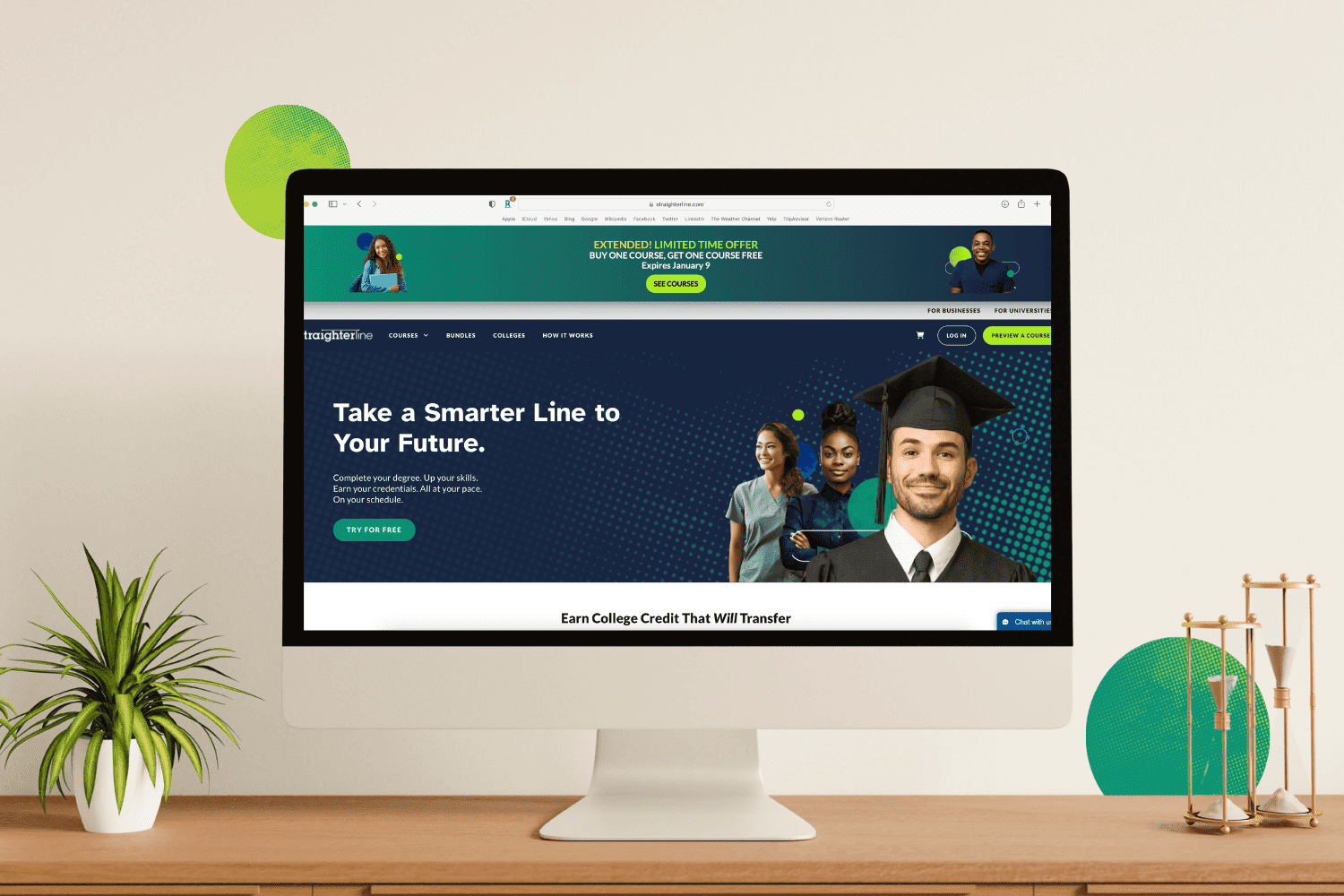
Interested in taking online college courses? StraighterLine offers affordable, self-paced online college courses, with course materials, tutoring, and transcript services included in its offerings. For students whose colleges accept the coursework, this can provide a lower-cost alternative for completing eligible general education requirements.
Check out the Find Your College tool to see if your school accepts StraighterLine credits.

How Long Does It Take to Complete an Online College Course?
The time required depends on the course format, subject, and amount of time you can dedicate to studying. Traditional semester-based online courses may follow a 15- or 16-week schedule, while accelerated courses may run for shorter terms.
Self-paced courses offer more flexibility because progress isn't necessarily tied to a semester calendar. However, self-paced courses still require the same dedication and effort as traditional formats. A college-level science or mathematics course may require substantial study time, regardless of how quickly you're allowed to complete it.
Before enrolling, check the course workload, assessment requirements, completion deadlines, and any prerequisites.
Who Should Consider Online Courses for College Credit?
Online coursework can be useful at several different stages of your education.
Students Working Toward a Degree
If you still need general education courses or electives, online options may help you complete eligible requirements without adding more in-person classes to your schedule.
Students Preparing for College
Eligible high school students may be able to begin college-level coursework before graduation, depending on provider requirements and future college acceptance policies.
Students Completing Prerequisites
If you're preparing for a nursing, healthcare, or other specialized degree program, online coursework may offer another way to complete required prerequisites. Some programs have specific requirements for labs or where prerequisites must be completed, so check those details carefully.
Adults Returning to College
If you've been away from school for several years, online courses can offer a manageable way to resume coursework while balancing employment, family, and other responsibilities.
Students Between Semesters
Summer breaks, winter breaks, and gaps between enrollment periods can provide opportunities to complete additional coursework without waiting for the next traditional semester.
How to Choose the Right Online Courses for College Credit
With so many options available, narrowing your choices can feel overwhelming. A few practical steps can help you make a more informed decision.
1. Identify the Requirement You Need
Start with your college's degree audit or academic catalog, and then determine whether you need a general education course, prerequisite, major requirement, or elective.
This helps you focus on courses that serve a specific purpose.
2. Research the Provider
Find out who offers the course and how the credit is recognized. Look for institutional accreditation when considering college-issued credit, or recognized credit recommendations when evaluating alternative providers.
3. Confirm Transfer Eligibility
Before paying for a course, contact your receiving college and ask whether it will accept the specific coursework.
More importantly, confirm which degree requirement the credit will satisfy. Getting that information in writing can help you avoid misunderstandings later.
4. Compare Course Formats
Consider whether you prefer a structured schedule or the independence of self-paced learning. Also review how exams are administered, whether tutoring is available, and what kind of support you'll receive if you need help.
5. Calculate the Total Cost
Compare all required fees, not just tuition. If you're evaluating several providers, calculate the cost per course and consider how many credits each option could contribute toward your degree.
6. Understand the Transcript Process
Find out how you'll document your completed coursework and submit it for credit evaluation.
Some providers issue college transcripts, while others use alternative credit records or transcript services. Understanding this process upfront can make it easier to submit your credits when you're ready.
Frequently Asked Questions About Online Courses for College Credit
Can you earn real college credit online?
Yes. Many accredited colleges offer online courses that award college credit. Alternative providers may also offer courses with credit recommendations that participating colleges can recognize.
Are online courses for college credit more affordable than traditional classes?
They can be. Some online providers offer lower-cost options for general education and prerequisite courses. Compare total costs and confirm credit acceptance before enrolling.
Can you take online college courses without being enrolled in a college?
Yes. Some colleges offer nondegree enrollment, and alternative course providers may allow eligible students to enroll without being admitted to a traditional degree program.
Are self-paced online college courses legitimate?
Yes, legitimate self-paced options exist. Evaluate the provider, course quality, credit documentation, and whether your intended college recognizes the coursework.
Can you take online courses for college credit while attending another college?
Often, yes. Many students complete approved outside coursework while enrolled at their home institution. Check your school's policies on concurrent enrollment and transfer credit before registering.
Can online courses help you graduate faster?
Potentially. Completing eligible requirements online may reduce the coursework remaining in your degree plan. Your graduation timeline will still depend on course sequencing, institutional requirements, and how accepted credits apply.
Start Earning College Credit on Your Terms With StraighterLine
Choosing the right online courses for college credit can give you more control over how you work toward your degree. Whether you're trying to reduce tuition costs, complete a prerequisite, or fit coursework around a busy schedule, the key is finding courses that match your academic requirements and your life.
If traditional semester schedules or high tuition costs are making it harder to move forward, explore StraighterLine's online courses.
With affordable, self-paced courses, academic support, and credits accepted at 3,000+ colleges and universities, StraighterLine can help you knock out the courses you need without putting the rest of your life on hold.