





Starting college comes with a lot to figure out, whether you're coming from high school, returning to school, or starting college for the first time as an adult. It can be a lot to fit into an already busy life — managing your course schedule, keeping track of assignments, balancing work and family, figuring out finances, and making decisions about your education and future.
Here's the good news: you don't need to have college completely figured out before your first class starts. Your freshman year is about learning how college works, building habits that fit your life, and figuring out what helps you succeed. That process looks different for everyone.
Quick answer: What are the best tips for college freshmen?
Get organized early
Attend class consistently
Ask for help before you're struggling
Learn how your degree requirements actually work
Build relationships with professors and classmates
Manage your money carefully
Make time for life outside the classroom
Most importantly, use your first year to figure out the routines and strategies that work best for you
Let's get into the details.
1. Get Organized Before Classes Get Busy
The first couple of weeks of your freshman year are the perfect window to set yourself up for success. One useful tip is to review every syllabus and pull the important dates — exams, papers, projects — into one calendar you'll actually check. Different professors will use different platforms and have different expectations, so it helps to have a single place where all your deadlines are organized.
You don't need to schedule every hour of your day. The goal is simply to know what's coming. A little structure now saves you from a scramble later, and it's much easier to build a system in September than to invent one the week before midterms.
2. Actually Go to Class, Even When Attendance Isn't Required
One of the biggest shifts from high school to college is that nobody's going to chase you down for missing class. That can offer an amazing sense of freedom, but it's also a little bit of a trap: missing one class can quietly turn into missing several.
Lectures often provide context you won't get from the textbook or slides alone, and professors frequently use class time to clarify assignments or hint at what's actually going to be on the exam. Showing up consistently also makes it a lot easier to build relationships with your professors and classmates, which pays off in more ways than one.
If you're taking online courses, "going to class" looks a little different. It means logging in regularly and moving through your coursework steadily, rather than letting three weeks of material pile up and hoping you can power through it in a weekend.
3. Learn How to Study for College-Level Classes
The study habits that got you through high school might not be enough in college as college classes tend to move faster and expect more independent work between sessions.
A few things that tend to help:
Break studying into shorter, regular sessions instead of one long cram
Use active recall — quizzing yourself — rather than just rereading notes
Work practice problems for math and science courses, not just reading through examples
Review material steadily throughout the semester instead of saving it all for finals week
Pay attention to whether you learn best through notes, practice questions, group discussion, or tutoring, and pursue what actually works for you
If you're still building your college study routine, self-paced courses can be a useful place to experiment. StraighterLine's guide to taking a college exam walks through strategies for prepping efficiently, and because StraighterLine courses let you work through material on your own schedule rather than around fixed class meeting times, they can be a great way to test out what studying rhythm suits you best.

4. Ask for Help Before You're in Trouble
Freshmen sometimes wait until they're genuinely struggling in a course before reaching out, but asking a question early is a lot easier than trying to relearn half a semester's worth of material right before finals.
You have more support available than you might realize: professor office hours, teaching assistants, academic advisors, tutoring centers, writing centers, the library, and student success services all exist specifically to help you.
Using these resources early isn't a sign you're falling behind. It's one of the clearest signs you're taking college seriously.
5. Understand Your Degree Requirements
Most degrees are built from a few different categories: general education requirements, major requirements, electives, and prerequisites that must be taken in a certain order.
Before you register, pull up your degree audit or course catalog and talk to an advisor rather than simply signing up for whatever sounds interesting. Courses that don't count toward your degree can cost you time and tuition dollars.
This is also where it's worth knowing your options. Some students are able to complete general education requirements — courses like English Composition, College Algebra, Introduction to Psychology, Introduction to Sociology, or U.S. History — through lower-cost online providers like StraighterLine. Just confirm transferability and degree applicability with your school before you enroll anywhere, since every institution handles transfer credit a little differently.
StraighterLine's post on which college course you should take first is a good starting point if you're not sure where to begin.
6. Get to Know Your Professors
When it comes to professors, introducing yourself, participating occasionally, and asking a thoughtful question here and there goes a long way. If you're dealing with a problem, communicating early makes a real difference in how a professor can work with you.
Over time, these relationships can turn into mentorship, research opportunities, internship recommendations, and eventually references you'll need for jobs or graduate school. You don't need to be the loudest voice in the room to build a genuine connection with a professor. Showing up to office hours when you actually need help is more than enough.
7. Make Connections Outside the Classroom
Freshman year isn't only about academics. Building even a small community can make the whole experience feel far more manageable. Go to orientation events, join a club, talk to the people sitting near you in class, or look for study groups where you can.
If you're commuting or taking classes online, connection may look a little different — virtual clubs, group chats, study groups, and professional organizations related to your major can all serve the same purpose. You don't need a packed social calendar. A few people you can text when you're stuck on an assignment, or grab coffee with between classes, makes a genuine difference.
8. Pay Attention to What College Is Costing You
College costs can put pressure on almost any budget, and for some students, it might be their first time managing a budget entirely. Between tuition, fees, books, transportation, and everyday expenses it helps to know exactly what you're spending and what your financial aid covers.
Build a realistic budget around your own circumstances, look for used or rental textbooks where you can, and keep an eye on smaller recurring costs that can add up over a semester. It's also worth understanding the financial impact of dropping, failing, or retaking a course, since paying for the same credits twice can make an already expensive degree even more costly. StraighterLine's posts on how to budget for college and how to pay for college without loans both go deeper into this if you want a fuller picture.
Another option worth looking into: completing eligible general education courses through an affordable college course platform like StraighterLine and transferring the credit can help reduce the overall cost of your degree at your school. Just make sure you confirm that the course will transfer and apply toward your degree before enrolling.
9. Don't Overload Your Schedule
There's often pressure to take the maximum number of credits, join every organization, work, and still keep good grades. Remember — you don't have to do all of it at once. A sustainable course load depends on your work schedule, commute, family responsibilities, how demanding your specific classes are, and your own study habits. If you can’t manage the heavy schedule, there’s no benefit to cramming everything into one semester.
If there's a requirement you'd rather knock out separately, or you want to get ahead over the summer or winter break, a self-paced online course can offer flexibility a traditional semester schedule doesn't. Our guide to the fastest online classes covers this in more detail — and because those courses can be started without waiting for a new semester to begin, they're a solid option if you want to lighten a future course load without falling behind.
10. Remember That One Bad Grade Doesn't Define Your College Career
Freshman year is an adjustment, and almost everyone hits a bump somewhere — a rough exam, a subject that doesn't click, a class you end up dropping. None of that means anything is going wrong. What actually matters is how quickly you respond.
When something doesn't go the way you hoped, it helps to ask yourself a few honest questions: What went wrong? Do I actually understand the material, or did I just run out of time? Am I spending enough time on this class? Would tutoring help? Is my overall course load realistic?
The goal was never a perfect freshman year — it's learning how to recover and keep moving forward, which is a skill that will serve you well past graduation.
FAQs About Freshman Year of College
What is the best advice for a college freshman? Get organized early and don't wait until you're struggling to ask for help. Keep track of deadlines, attend class consistently, communicate with professors, and learn which campus resources are available to you. You don't need to have your entire college career planned during your first semester.
How many classes should a college freshman take? Many full-time undergraduate students take around 12–15 credits per semester, but the right course load depends on your school, degree program, work schedule, financial aid requirements, and other responsibilities. Talk with your academic advisor before deciding how many credits to take.
What should you avoid during your freshman year of college? Common mistakes include skipping classes, waiting until the last minute to study, ignoring your syllabus, taking courses without understanding how they apply to your degree, overspending, and waiting too long to ask for academic help.
Can freshmen take online college courses? Yes. Many freshmen take online courses through their college or other approved providers. Online courses can provide additional flexibility, particularly for general education requirements, summer courses, or schedule conflicts. If you're taking a course outside your college, always confirm that the credit will transfer and apply to your degree before enrolling. StraighterLine's guide on how it works to earn college credit online explains this process in more detail.
How can I make freshman year less stressful? Start by creating a realistic weekly routine rather than trying to manage everything as it comes up. Keep your academic deadlines in one place, leave time for sleep and activities outside school, and reach out for help when something starts becoming difficult. College is an adjustment, and developing routines early can make the rest of the semester much easier.
How StraighterLine Can Help You Make Progress in College
College doesn't always move on a perfect four-year schedule, and that's completely normal. You might need to finish a prerequisite, catch up on credits, lighten a future semester, or complete a general education requirement your school isn't offering right now.
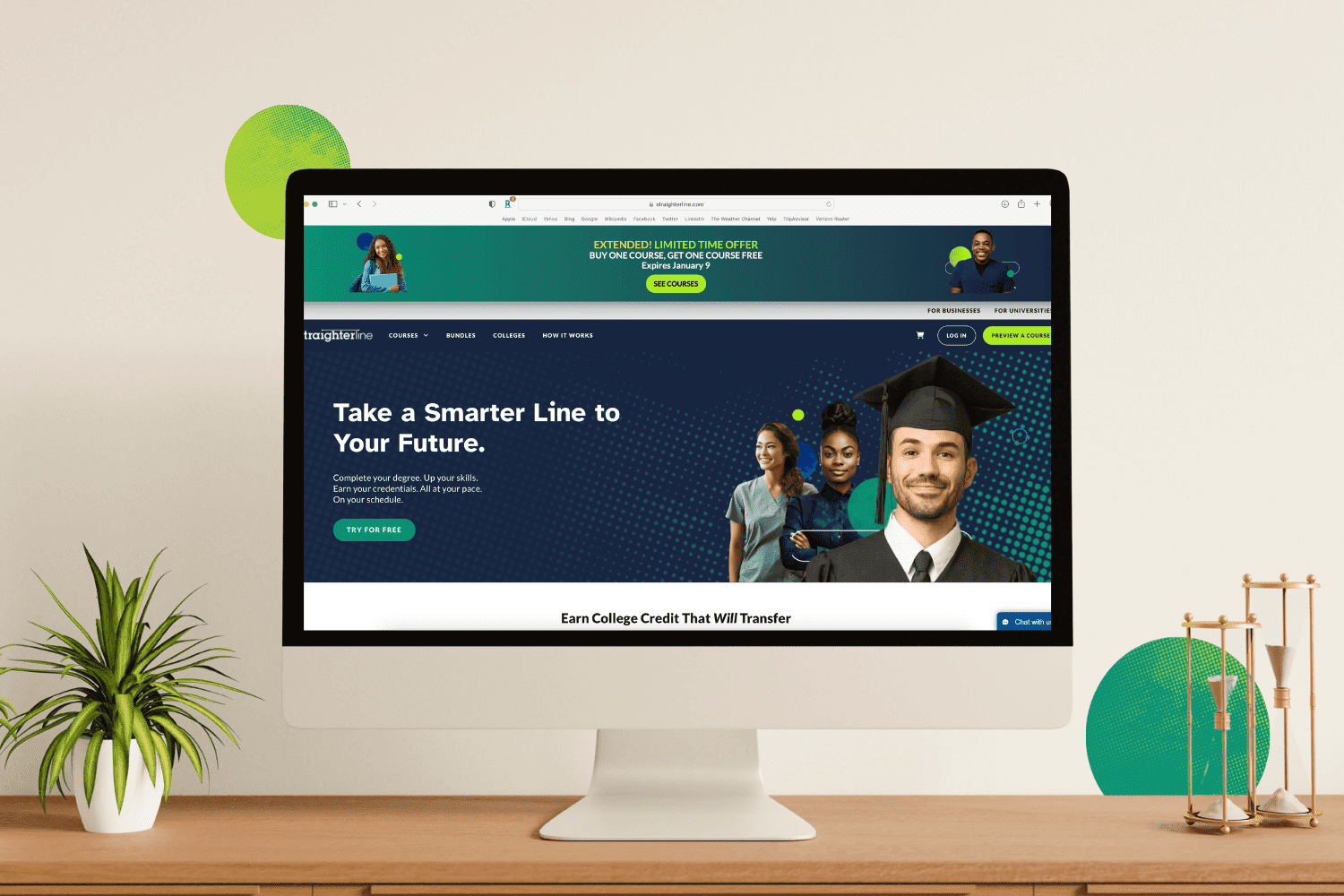
StraighterLine offers self-paced online college courses you can start anytime, including common general education subjects like English, math, science, business, and social science. Courses are ACE-recommended and designed to help you earn transferable college credit on a schedule that actually works for your life.
As always, confirm with your college ahead of time that a course will satisfy the specific requirement you need.
If you're looking for a flexible way to stay on track toward your degree, exploring StraighterLine's course catalog is a great place to start.