





Dual enrollment is a great way for homeschool students to begin earning college credit before graduating high school. But what if your local college doesn't accept homeschool students into its program? Or the courses you need aren't available, the schedule doesn't fit, or the tuition is more than your family wants to spend?
Fortunately, dual enrollment isn't the only way for homeschool students to get a head start on college. Several alternatives allow eligible students to demonstrate college-level knowledge, complete coursework online, or pursue credits outside traditional dual enrollment programs.
From self-paced online courses to credit-by-exam programs, understanding your options can help you find an approach that fits your student's learning preferences, academic goals, and your family's budget.
Why Do Homeschool Families Look for Dual Enrollment Alternatives?
Traditional dual enrollment programs generally allow high school students to take college courses while working toward their high school diploma. However, access and eligibility vary by state, institution, and program.
Homeschool families may encounter challenges such as:
- Eligibility restrictions: Some programs have age, grade-level, GPA, or residency requirements
- Limited course availability: Local colleges may not offer the subjects or course sections a student needs
- Scheduling conflicts: Semester calendars and fixed deadlines may not fit a homeschool schedule
- Additional costs: Tuition, textbooks, transportation, and fees can make some programs expensive
- Location barriers: Families in rural areas may have fewer nearby options
These challenges don't necessarily mean students need to postpone college-level learning. They may simply benefit from exploring other pathways.
What Are the Best Dual Enrollment Alternatives for Homeschool Students?
Several options allow homeschool students to pursue potential college credit without participating in a traditional dual enrollment program.
| Option | How It Works | Best For |
|---|---|---|
| Self-paced online college courses | Complete college-level coursework online | Students needing scheduling flexibility |
| CLEP exams | Demonstrate knowledge through standardized exams | Students who already know a subject |
| AP exams | Earn qualifying scores on college-level subject exams | Students comfortable with exam-based assessment |
| DSST exams | Demonstrate college-level knowledge through subject exams | Students whose future colleges accept DSST |
| Credit for prior learning | Have existing knowledge or skills evaluated | Students with substantial relevant experience |
Each option has different eligibility rules and methods for awarding or recommending credit. The best choice depends on your student's academic preparation and where they hope to attend college.
1. Self-Paced Online College Courses
For homeschool students who prefer learning independently, self-paced online college courses may be one of the most practical alternatives to traditional dual enrollment.
Rather than attending scheduled classes, students complete lessons, assignments, and assessments online, generally progressing according to their own schedules within the provider's course requirements.
This format may be particularly useful for students who:
- Learn at different speeds across subjects
- Have demanding extracurricular schedules
- Want to study during summer or other breaks
- Need access to courses unavailable locally
- Prefer completing coursework from home
Some self-paced courses award credit directly through a college, while others carry independent credit recommendations that receiving colleges may recognize.
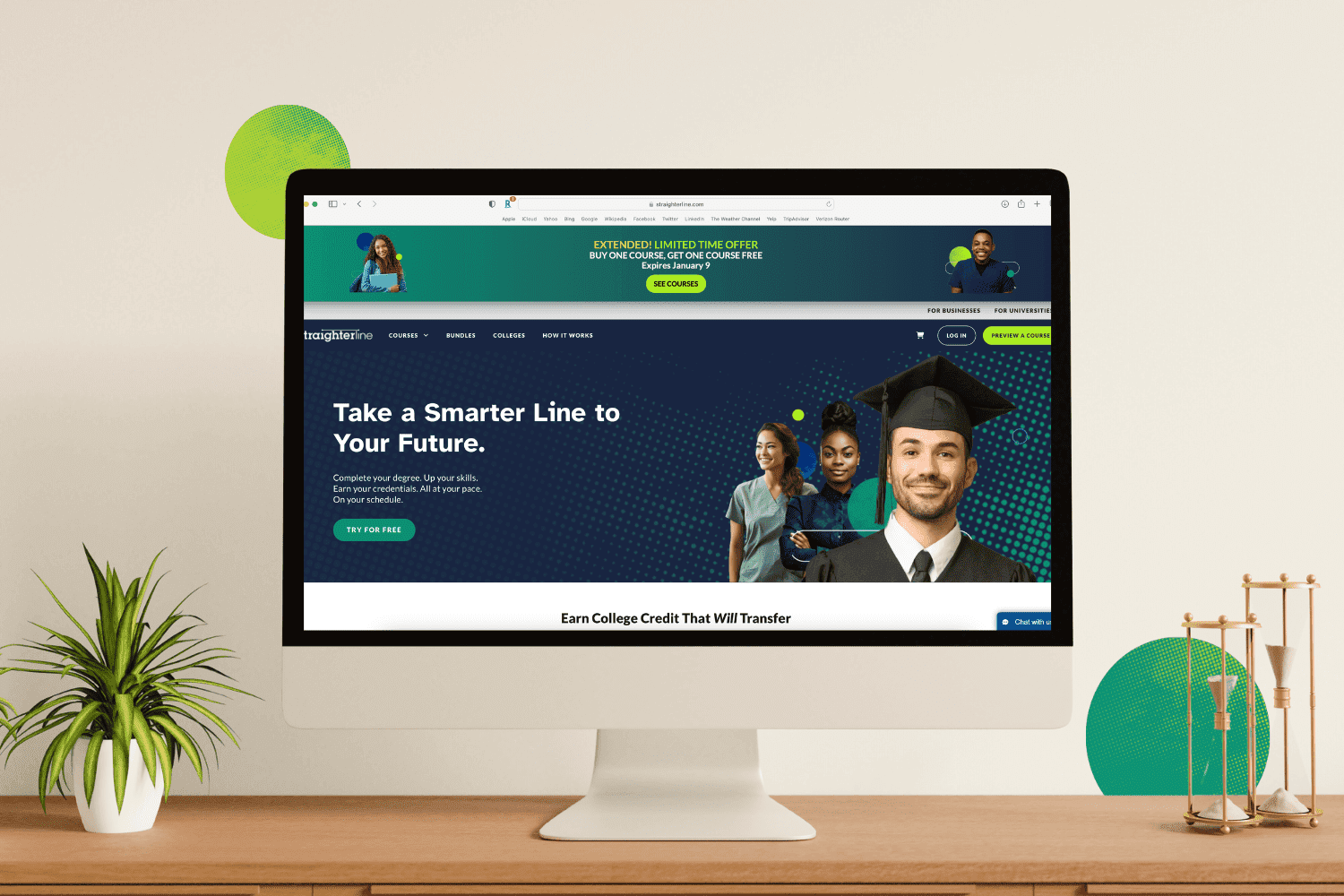
For example, StraighterLine offers affordable, self-paced online courses across common college subjects, with many courses carrying American Council on Education (ACE) credit recommendations — making StraighterLine credits transferable to more than 3,000+ accredited colleges and universities.
For eligible homeschool students, this provides another way to pursue college-level coursework without relying on a local college's dual enrollment schedule. Families should review StraighterLine's current enrollment requirements and verify course acceptance with prospective colleges before enrolling.

2. CLEP Exams
The College-Level Examination Program (CLEP), administered by College Board, allows students to demonstrate college-level knowledge through standardized exams.
Instead of completing a full course, students prepare for an exam and receive a score that participating colleges can evaluate for credit.
CLEP subjects include:
- English Composition
- College Algebra
- Biology
- Psychology
- Sociology
- U.S. History
- Economics
For homeschool students who have already studied these subjects extensively, CLEP can offer an efficient way to demonstrate what they know. However, not every college accepts every CLEP exam. Institutions establish their own qualifying scores, credit limits, and course equivalencies.
Before registering, families should review prospective colleges' CLEP policies and determine whether a particular exam would satisfy a useful requirement.
3. Advanced Placement (AP) Exams
Advanced Placement exams are another option for homeschool students, even if they aren't enrolled in a traditional high school AP course.
Students may prepare independently using homeschool curricula, textbooks, and online resources aligned with AP subject expectations. They then arrange to take the exam through a participating school.
AP exams are scored from 1 to 5, and colleges determine which scores qualify for credit or advanced placement. This approach can work well for students who enjoy structured academic preparation and are comfortable demonstrating their knowledge through a comprehensive exam.
One important consideration is scheduling. AP exams are generally offered during a designated annual testing period, so families need to plan ahead and arrange testing through an authorized school.
4. DSST Exams
DSST exams offer another credit-by-examination pathway.
Like CLEP, DSST allows students to demonstrate knowledge of college-level subjects without completing a traditional semester-long course.
Available exams cover areas such as:
- Business
- Humanities
- Mathematics
- Social sciences
- Technology
DSST may be particularly useful for students who have developed subject knowledge through independent study or specialized homeschool coursework. However, acceptance varies by institution, and some colleges recognize CLEP but not DSST, or vice versa.
Families should also check exam eligibility and testing requirements before choosing this route.
5. Credit for Prior Learning
Some colleges offer opportunities to earn credit for knowledge and skills developed outside traditional academic settings.
This is commonly called credit for prior learning (CPL) or prior learning assessment.
Depending on the institution, students may be able to demonstrate college-level learning through:
- Portfolio assessments
- Departmental challenge exams
- Industry certifications
- Documented professional or technical experience
- Other approved competency assessments
For example, a student who has spent years developing advanced computer programming skills might eventually be able to demonstrate that knowledge through a college's assessment process. It’s worth noting that credit for prior learning is highly institution-specific. Many colleges restrict these opportunities to admitted or enrolled students, and eligibility requirements may make this a less accessible option for younger homeschool learners.
It's worth researching, particularly for students with substantial experience in a specialized subject.
Which Dual Enrollment Alternative Is Right for Your Student?
The most useful way to compare options is to start with your student's circumstances rather than choosing a program based solely on its advertised benefits.
If Your Student Needs Flexibility
Self-paced online courses may offer the greatest control over when coursework happens. This can be helpful for students balancing academics with athletics, performing arts, travel, or other commitments.
If Your Student Already Knows the Material
CLEP or DSST exams may be worth exploring. These options allow students to demonstrate existing knowledge without necessarily repeating a full course.
If Your Student Prefers Structured Exam Preparation
AP exams may be a good fit, particularly when your homeschool curriculum already covers the relevant material.
If Your Student Has Specialized Experience
Credit for prior learning may eventually provide opportunities to demonstrate knowledge developed through independent projects or other experiences.
The right choice may also vary by subject. A student could use an exam-based pathway for one requirement and complete an online course for another.
How Do Colleges Evaluate Credits From Alternative Programs?
One of the biggest differences among dual enrollment alternatives is how academic credit is recognized.
For example:
- College-issued credit: A student completes a course through a college and receives credit on an official college transcript
- Exam-based credit: A college awards credit based on qualifying scores from exams such as AP, CLEP, or DSST
- ACE-recommended coursework: An independent evaluation recommends credit that colleges may choose to recognize
- Prior learning credit: A college evaluates demonstrated knowledge according to its own policies
These pathways aren't interchangeable, and acceptance isn't automatic. Before committing to a particular option, families should ask prospective colleges whether they accept the credit and, importantly, which degree requirement it would satisfy.
A course or exam that counts only as elective credit may be less useful if the goal is to complete a specific prerequisite.
How Much Do Dual Enrollment Alternatives Cost?
Costs depend on the pathway and provider.
Exam-based options typically involve exam fees and potentially study materials or testing-related expenses. Online courses may charge per course, per credit, or through a subscription model.
When comparing costs, consider:
- Enrollment or exam fees
- Required textbooks and materials
- Technology requirements
- Proctoring fees
- Transcript or score-report fees
- Any available discounts or financial assistance
A lower upfront price can be appealing, but the most valuable option is one that your student's future college recognizes for an applicable requirement.
Families should also compare these alternatives with local dual enrollment programs, since some states offer subsidized or tuition-free college courses for eligible homeschool students.
How Can Homeschool Families Get Started?
Once you've identified a promising option, use this process to turn it into an academic plan.
1. Identify Potential College Requirements
If your student has a list of prospective colleges, review their general education requirements and credit policies. Look for subjects that appear across several institutions.
2. Match the Pathway to the Subject
Consider whether your student would benefit more from taking a course or demonstrating existing knowledge through an exam.
For example, a student who needs additional instruction in algebra may benefit from a full course, while someone who has already mastered the material might consider a credit-by-exam option.
3. Verify Eligibility and Credit Acceptance
Confirm that your student meets the provider's enrollment or testing requirements. Then check with prospective colleges about how the credit would be evaluated.
4. Plan the Workload
College-level coursework and standardized exams require preparation. Choose a realistic schedule that doesn't interfere with high school graduation requirements or other important commitments.
5. Keep Official Records
Save course descriptions, syllabi, exam results, completion records, and transcripts. If coursework is also intended to satisfy homeschool graduation requirements, follow your state's documentation rules and any applicable umbrella school or program policies.
Frequently Asked Questions About Dual Enrollment Alternatives
Can homeschool students earn college credit without dual enrollment?
Yes. Eligible homeschool students may pursue college credit through AP, CLEP, or DSST exams, online college courses, and certain prior learning assessment programs.
What is the most flexible alternative to dual enrollment?
Self-paced online college courses are often among the most flexible options because students can generally complete coursework without attending regularly scheduled classes.
Can homeschool students take CLEP exams?
Yes. Homeschool students can take CLEP exams, subject to the testing program's requirements. Colleges determine which exam scores qualify for credit.
Are online college courses better than dual enrollment?
Not necessarily. Online courses may offer more flexibility, while traditional dual enrollment may provide college-issued credit and access to subsidized tuition. The best choice depends on the student's goals and available programs.
Do colleges accept ACE-recommended courses?
Some do. ACE recommendations provide an independent evaluation of college-level learning, but receiving colleges determine whether to award credit.
Explore Flexible College Credit Options With StraighterLine
Traditional dual enrollment isn't the only way for homeschool students to begin working toward earning college credit. Whether your student prefers independent coursework, has already mastered certain subjects, or needs an alternative to a local college's schedule, there are several pathways worth considering.
The key is choosing an option that fits your student's academic readiness, learning preferences, and future college plans.
If self-paced online learning sounds like the right fit, explore StraighterLine's online course catalog. With affordable courses across common college subjects and a history of credit acceptance at 3,000+ colleges and universities, StraighterLine offers eligible homeschool students a flexible way to pursue college-level coursework without depending on traditional dual enrollment programs.