





Choosing how to earn college credit used to be simple: enroll at your local community college and follow the semester schedule. Today, you have more options and more flexibility than ever before.
So which path makes more sense: online courses or community college?
The answer depends on your goals, schedule, and budget. But for many students balancing work, family, and financial pressures, online learning is becoming the smarter, faster route.
TL;DR: Online Courses vs. Community College
Cost: Online courses can cost significantly less overall — especially when you factor in books, fees, and time.
Flexibility: Online learning lets you start anytime and move at your own pace.
Transfer Credits: Both community colleges and online courses can transfer to your degree at a university, but verification is essential.
Scheduling: Community colleges follow semesters; many online courses offer rolling enrollment.
Best Strategy: Combining both options can maximize savings and speed.
If you want affordability and momentum, online courses deserve a serious look.
What’s the Difference Between Online Courses and Community College?
Online courses prioritize flexibility and pace, while community colleges offer structured, campus-based learning environments.
Community colleges are two-year institutions that provide associate degrees, certificates, and general education credits. They follow traditional academic calendars, offer in-person classes (with some online options), and operate on fixed semesters.
Online courses — especially those designed for transfer credit — allow students to enroll anytime, complete coursework at their own pace, and study from anywhere. There’s no commuting. No full classrooms. No waiting for next term.
For students who need structure and face-to-face interaction, community college can be a great fit. But for self-motivated learners who want control over their schedule, online courses remove barriers that often slow progress.
Are Online Courses Cheaper Than Community College?
In many cases, yes. Online courses cost less overall when you account for tuition, materials, and time.
Community colleges are more affordable than four-year universities, but tuition isn’t the only expense. Students often pay for:
Textbooks (which can cost hundreds per course)
Lab fees
Campus fees
Transportation or parking
Lost time waiting for the next semester
Online courses frequently bundle materials into the course cost and eliminate commuting entirely. More importantly, self-paced formats can help students finish faster, which reduces total time spent paying for education.
Time matters. If you can complete a course in weeks instead of a full semester, that’s money and momentum saved.
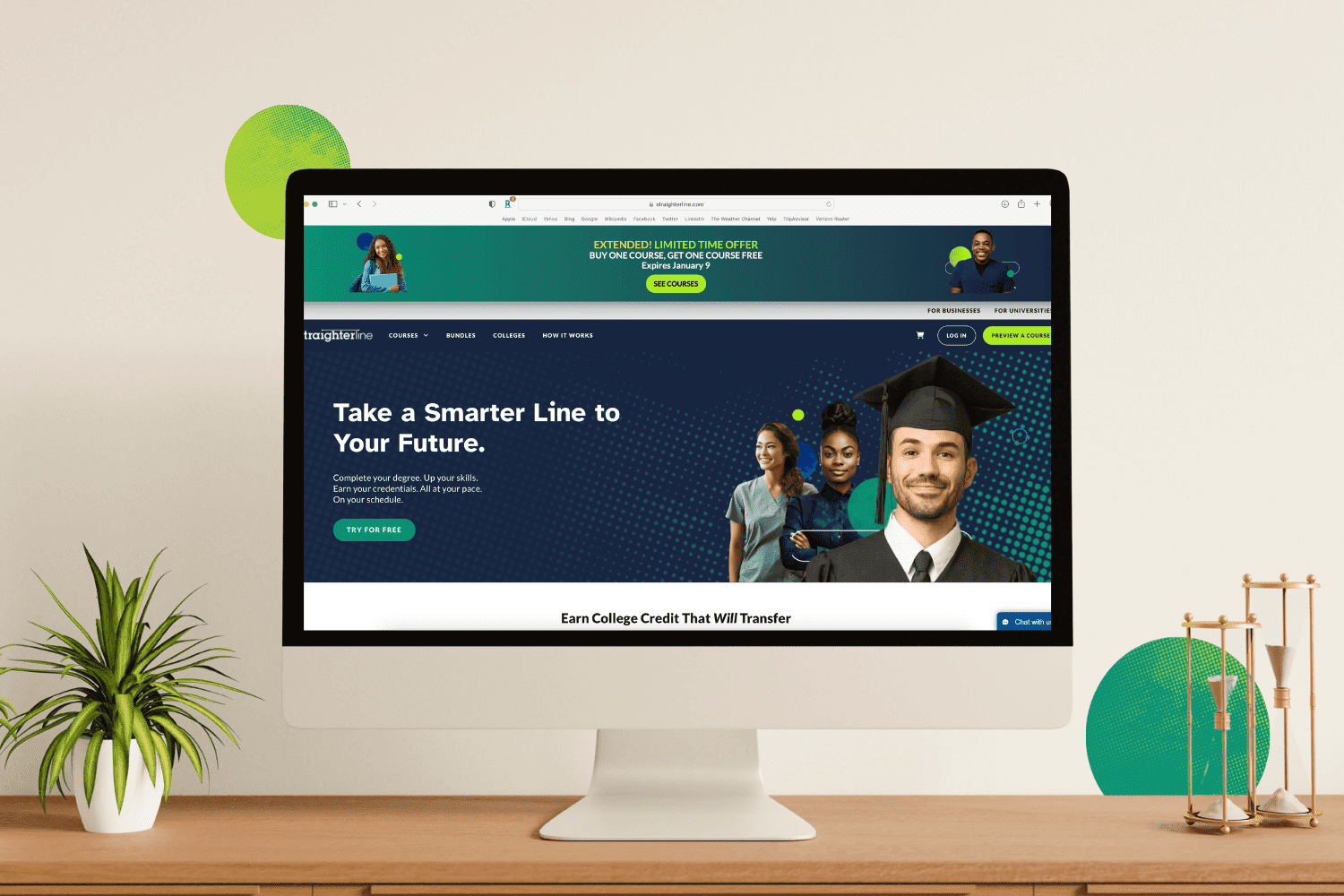
For example, platforms like StraighterLine offer a much more affordable cost with digital materials included. This makes it easier to budget without surprise fees. The goal isn’t just lower cost per course. It’s lower cost per completed credit.

Do Online Courses Transfer to Colleges?
Yes, many online courses transfer — but transferability always depends on the receiving institution.
Transfer policies vary widely between colleges. Some accept credits recommended by recognized evaluators like the American Council on Education (ACE). Others have specific partnership agreements.
The same is true for community college credits. While they often transfer within state systems, they are not automatically guaranteed to transfer everywhere.
Here’s what smart students do:
Identify their target school.
Review that institution’s transfer policy.
Confirm course equivalency before enrolling.
When you verify first, you protect your progress.
StraighterLine, for example, partners with a wide network of colleges and universities and provides guidance on transfer acceptance — helping students make informed decisions before they commit.
Bottom line: Whether you choose community college or online courses, always confirm transfer alignment first.
Can You Start Online Courses Faster Than Community College?
Yes. Most online courses offer immediate enrollment, while community colleges operate on fixed academic calendars.
Community colleges typically follow fall, spring, and sometimes summer terms. If you miss registration, you could wait months to start. Popular courses can also fill up quickly.
Online courses designed for flexible learners remove that friction. You can enroll when you're ready and begin immediately.
That flexibility is especially valuable if you:
Need one prerequisite to unlock your degree path
Want to catch up after withdrawing from a semester
Are trying to graduate faster
Are working full-time and need control over pacing
When education fits your schedule instead of forcing you into one, completion becomes more realistic.
Is Online Learning as Legitimate as Community College?
Yes. Legitimate online courses that meet recognized academic standards can hold the same academic value as traditional coursework.
Quality matters. Not all online courses are built the same.
When evaluating legitimacy, look for:
Accreditation or recognized course recommendations (such as ACE)
Transparent learning outcomes
Proctored assessments where applicable
Clear transfer partnerships
Community colleges are accredited institutions. Online providers vary, so due diligence is key. But reputable platforms meet established academic standards and are designed specifically for transfer-credit acceptance.
Online education isn’t a shortcut. It’s a different delivery method.
Is Online Learning Easier Than Community College?
Not necessarily, but it is more flexible.
Online courses require self-discipline and time management. Without set class times, students must stay accountable to their own schedules.
For some learners, that independence is empowering. For others, in-person structure is motivating.The real question isn’t “Which is easier?” It’s “Which format helps you stay consistent?” If flexibility increases your likelihood of finishing, that’s a win.
What About Student Support?
Strong online programs offer tutoring and support that rivals, and sometimes exceeds, campus availability.
Community colleges provide advising, office hours, and tutoring, typically during business hours.
Many online learning platforms now offer:
24/7 tutoring access
On-demand support
Digital resources
Responsive student services
That means help is available when you’re actually studying — whether that’s 10 a.m. or 10 p.m. Support doesn’t disappear online. It just becomes more accessible for non-traditional schedules.
Who Benefits Most from Online Courses?
Online courses are ideal for working adults, transfer students, career changers, and anyone seeking flexibility.
You might benefit most if you:
Work full-time
Have family responsibilities
Need affordable general education credits
Want to accelerate your degree timeline
Missed a prerequisite at your current institution
Online courses reduce the friction that often causes students to pause their education.
Community college works well for recent high school graduates seeking structure and campus experience. But today’s learners are increasingly balancing multiple roles, so flexibility matters more than ever.
Can You Combine Online Courses and Community College?
Yes, and many students strategically use both to save money and graduate faster.
Here’s how that might look:
Complete flexible general education credits online.
Transfer them into a degree-granting institution.
Use community college for in-person labs or specialized courses if needed.
Blending options allows you to prioritize cost savings and speed without sacrificing quality. The key is planning your transfer path upfront.
The Bottom Line: Which Option Is Better?
There isn’t a universal answer.
Community colleges offer structure and in-person learning. Online courses offer affordability, flexibility, and speed.
But if your biggest pain points are cost, time, or scheduling conflicts, online courses provide a practical solution that keeps you moving forward. Education should adapt to your life — not the other way around.
Ready to Earn College Credits on Your Schedule?
If you’re looking for an affordable way to complete general education requirements, accelerate your degree, or transfer credits with confidence, StraighterLine is built for exactly that.
With flexible start dates, included digital materials, and transfer-friendly course design, you can take control of your progress, without waiting for the next semester or overpaying for credits.
Explore our online courses that fit your timeline and budget.
Your degree doesn’t have to pause. Start moving forward today with StraighterLine.
FAQs
Are online college courses worth it?
Yes, especially if they save you time and money while meeting transfer requirements. The value comes from flexibility, affordability, and progress toward your degree.
Is community college cheaper than online classes?
It can be affordable, but online courses are often cheaper when you factor in textbooks, fees, and scheduling flexibility. Always compare total cost, not just tuition.
Do employers respect online credits?
Employers care more about your completed degree than where you completed individual prerequisite courses. What matters most is finishing.
Can I finish faster with online courses?
Often, yes. Self-paced formats allow motivated students to complete coursework in less time than a traditional semester.