





Failing a college class can happen, regardless of your high school performance or study habits. The good news? One failing grade doesn't have to define your academic future. Whether you're at risk of failing or have already received a failing grade, there are plenty of pathways to academic recovery and graduation success.
This guide covers what you can do now, some long-term strategies, and alternative options that will help you bounce back from a failing grade stronger than ever.
What To Do When You Find Out You’re Failing A Class
You just found out you’re failing a class — now what? If you find out you're failing mid-semester, this gives you valuable time to course-correct. Here are a few things you can do right now to get back on the right track.
1. Talk to Your Professor
Your professor is the first person to talk to about grade recovery. Schedule office hours or request a one-on-one meeting to discuss the following questions:
Grade Analysis Questions:
Which assignments or exams are lowering my overall grade?
What's the breakdown of my current performance by category?
Are there patterns in my mistakes that I should address?
Recovery Options:
Is extra credit available to improve my grade?
Can I resubmit assignments or retake exams?
Am I eligible for an "Incomplete" grade instead of a failing grade?
What alternative assessments might help demonstrate my understanding?
Future Success Planning:
What study strategies would you recommend for this material?
Are tutoring services or study groups available?
If I need to retake this course, what feedback can help me succeed next time?
2. Meet With Your Academic Advisor
Your academic advisor can offer perspective on academic recovery from your schools perspective. These conversations help you understand the bigger picture:
Immediate Impact Assessment:
How will this failing grade affect my overall GPA and academic standing?
Will I be placed on academic probation or lose academic honors?
Could this impact my financial aid eligibility or scholarship requirements?
What are the consequences for my specific degree program?
Course Recovery Options:
Is course withdrawal still possible before the deadline?
What's the difference between a "W" (withdrawal) and "F" (fail) on my transcript?
When can I retake this class if needed?
Are alternative courses available that fulfill the same requirement?
Can I take summer courses or winter session classes to stay on track?
Graduation Timeline Planning:
Will this affect my expected graduation date?
What accelerated or online options exist to make up credits?
Should I consider adjusting my course load next semester?
What are the Consequences of Failing a Class?
Failing a class can come with different consequences depending on your institution's policies, your current academic standing, and your educational goals. It may affect your GPA, financial aid eligibility, academic probation status, or timeline to graduation. We'll go into more detail on how below.
Impact on Your Academic Record
A reduction in your GPA or a negative mark on your transcript is often the biggest concern when failing a class.
GPA Reduction:
A failing grade may lower your cumulative GPA, which can in turn:
Disqualify you from honors programs or dean's list recognition
Affect eligibility for academic scholarships and merit-based aid
Influence competitive program admissions within your university
Transcript Implications:
If the failing grade is visible on official transcripts, a few possible implications include:
An impact on how graduate school admissions committees review your application
Employer review of transcripts for entry-level positions
Scrutiny of academic performance on professional school applications
Academic Standing Changes
A failing grade can also trigger academic probation, typically if your GPA falls below the institutional minimum (often 2.0).Consequences may include:
Meeting specific conditions to regain good standing
Mandatory academic counseling or tutoring requirements
Limited extracurricular participation and leadership roles
Risk of academic suspension if performance doesn't improve
Financial Aid Consequences:
Federal aid requires Satisfactory Academic Progress (SAP). Possible consequences of falling below SAP standards may include:
Suspended financial aid eligibility
Loss of scholarships
Loss of grants that require completion of a certain percentage of attempted credits
Degree Progress Delays
Major prerequisites may need to be retaken before advancing. If you fail a class, here are some retake requirements to keep in mind:
Some programs limit the number of retake attempts
Retaking courses extends time to degree completion
May require enrollment in additional semesters
It can also impact your graduation timeline for the following reasons:
Missing prerequisites delays enrollment in sequential courses
May push graduation back by one or more semesters
Could affect student housing, internship timing, and job offers
Increases overall cost of degree completion
Your Options After Failing a College Class
You have several pathways forward depending on your goals, resources, and institutional policies. In many cases, you can retake the course to replace or improve your grade, explore grade forgiveness policies, or adjust your academic plan with an advisor. Some students also consider transferring credits, appealing the grade (if appropriate), or reassessing their course load to better support future success. Let's look into each of these options more closely.
Course Retake Strategies
A traditional retake at your current institution involves enrolling in the same course next semester. This is often the most straightforward option for course retakes.
Advantages:
Familiar with professor expectations and course structure
May benefit from grade replacement policies
Easier credit transfer within the same institution
Access to same campus resources and support services
Considerations:
Must fit into your schedule and course sequence
Costs full tuition for course credit hours
May face the same instructor or teaching method
Could delay progress if course isn't offered every semester
Another option is retaking the course through an online provider. Retaking your course online through accredited providers offers flexibility and cost savings.
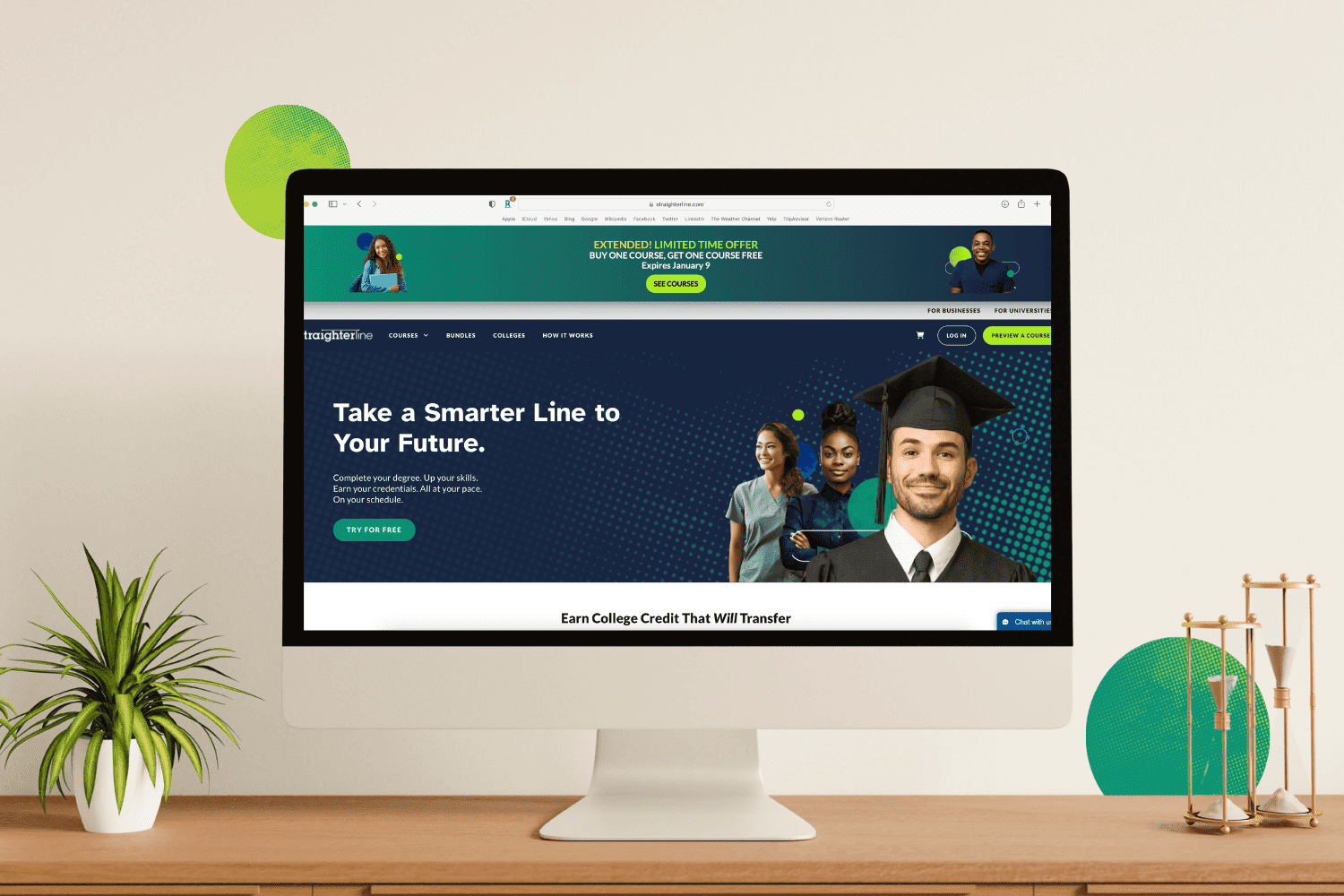
StraighterLine provides affordable, flexible course options that transfer to over 3,000 colleges and universities.
Self-paced learning lets you progress at your own speed
24/7 access means you study when it works for your schedule
Significantly lower cost than traditional tuition
All courses are ACE credit-recommended and transferable
Success coaches provide personalized support throughout your course
When Online Courses Make Sense:
You need flexibility due to work or family commitments
The course is expensive at your current institution
You want to graduate on time without delaying other courses
You prefer self-paced learning over traditional classroom structure
You're looking to reduce the overall cost of your degree
Not sure where to start? Learn which college course to take first to build confidence and momentum.
Alternative Degree Pathways
If this isn't your first struggle in your current major, switching fields might offer you the opportunity to choose coursework that better aligns with your strengths.
Signs a Major Change Might Help:
Consistent difficulty with core requirements in your current major
Stronger performance and interest in other subject areas
Career goals have shifted since declaring your major
Passion for coursework in a different field
Better job market prospects in alternative fields
Action Steps for Switching Majors:
Meet with advisors in both your current and prospective departments
Review how many credits will transfer to the new major
Calculate impact on graduation timeline and total cost
Research career outcomes for the new field
Consider completing a minor in your original area of interest
Credit Recovery Options
Intensive term courses, like summer or winter sessions, help you catch up without delaying graduation. Learn more about mastering prerequisite courses to understand how strategic planning can accelerate your degree completion.
Benefits of intersession courses:
Faster completion focuses your attention on one subject
Often available online for maximum flexibility
Helps maintain momentum in your degree progress
Can improve GPA before next semester begins
Taking courses at community colleges offers another affordable path to credit recovery.
Transfer considerations:
Verify course equivalency with your home institution first
Confirm credit will count toward your major requirements
Ensure the community college is regionally accredited
Get written pre-approval from your academic advisor
Understand grade transfer policies (some schools transfer credit but not grades)
If you're short on credits needed to graduate, online courses can help you fill gaps quickly and affordably.
Building Academic Resilience After Failure
Recovering from academic failure requires both practical strategies and mindset shifts. By reflecting on what went wrong, seeking support early, and adjusting your study approach, you can turn setbacks into opportunities for long-term growth and stronger performance.
Develop Stronger Study Habits
Failing a class often reveals gaps in study skills or time management. You can address these systematically by using proven strategies for successful online students.
Time Management Improvements:
Use a planner or digital calendar to track all deadlines
Break large assignments into smaller, manageable tasks
Schedule specific study blocks for each course weekly
Build in buffer time for unexpected challenges
Limit distractions during dedicated study periods
Learn more time management tips for taking multiple courses to balance your workload effectively.
Study Technique Enhancements:
Attend office hours regularly, not just before exams
Form or join study groups with motivated classmates
Use active learning strategies like practice problems and self-testing
Create summary sheets and flashcards for review
Teach concepts to others to reinforce understanding
Check out these tips for successful online test taking to improve your exam performance.
Resource Utilization:
Visit campus tutoring centers early and often
Explore supplemental instruction or peer tutoring programs
Use online learning resources like Khan Academy and video tutorials
Consider hiring a private tutor for particularly challenging subjects
Take advantage of writing centers for essay-based courses
Maintain Perspective and Self-Compassion
Academic setbacks are challenging, but they don't define your potential as a student. Here are a few things you can do to regain perspective and take your next steps forward.
Healthy mindset practices:
Acknowledge disappointment without dwelling on self-criticism
Identify specific factors that contributed to the failure
Focus on what you can control moving forward
Recognize that many successful people faced academic setbacks
Seek support from friends, family, or counseling services if needed
Growth-oriented thinking:
View failure as information, not identity
Ask "What can I learn?" instead of "Why can't I do this?"
Celebrate small improvements and progress
Set realistic, achievable goals for grade recovery
Remember that resilience is built through overcoming challenges
How StraighterLine Supports Academic Recovery
When you need to retake a course or get back on track toward graduation, StraighterLine offers a proven path to success with self-paced courses, affordable tuition, and transferable credits designed to help you stay on schedule and achieve your academic goals.
Flexible, Self-Paced Learning
Study on Your Schedule:
Access course materials 24/7 from anywhere
Progress at your own pace without fixed class meeting times
Complete courses faster when you're focused and motivated
No penalties for working around job or family obligations
Personalized Support:
Dedicated success coaches guide you through challenges
Quick response times to questions (typically within 24 hours)
Access to subject matter experts when you need help
Community forums connect you with other students
Ready to start? Learn what to do after signing up for online courses to hit the ground running.
Affordable Credit Recovery
Significant Cost Savings:
Subscription-based pricing starts at just $99/month
Complete multiple courses within one subscription period
Avoid paying full tuition rates twice for the same credit
No hidden fees or surprise charges
Quality Education:
Content developed by subject matter experts
Regular updates ensure current, relevant material
Same rigorous standards as traditional college courses
Seamless Credit Transfer
Transfer to 180+ Partner Schools: StraighterLine has formal partnerships with over 180 colleges and universities that guarantee credit transfer.
Non-Partner School Options: For schools without formal partnerships, receive an official ACE transcript that thousands of institutions consider when evaluating transfer credit. Discover where you can transfer StraighterLine credit and how it works.
Easy Transfer Process:
Work with your home institution's registrar office
Provide official StraighterLine/ACE transcripts
Confirm credit application to your degree requirements
Credits typically transfer within 2-4 weeks
Take Action on Your Academic Recovery Today
Failing a class is disappointing, but it's not permanent. The key is taking immediate, informed action:
Assess your current situation by talking with professors and advisors
Explore all recovery options including retakes, online courses, and alternative paths
Create a concrete plan with specific deadlines and milestones
Build support systems through tutoring, study groups, and mentors
Consider affordable alternatives like StraighterLine for flexible credit recovery
Ready to get back on track? Explore StraighterLine's 80+ college courses that transfer to thousands of schools nationwide. With flexible, self-paced learning and 24/7 support, you'll have everything you need to succeed.
Your academic journey isn't over. It's just taking a different route. Take the first step toward recovery today.
FAQs
Will graduate schools see that I failed a class?
Yes, a failing grade does appear on your official transcript. However, graduate admissions committees consider your entire academic record, including upward trends, course rigor, and explanations for academic struggles. A strong personal statement, improved grades, and relevant experience can help offset a single failure.
How many times can I retake a failed class?
Retake policies vary by institution. Most schools allow at least one retake attempt, with some permitting multiple attempts. Check your student handbook or consult your academic advisor for specific policies at your school.
Does retaking a class replace the F on my transcript?
Grade replacement policies will depend on your school. Some schools replace the failing grade in GPA calculations but keep the F visible on transcripts. Others average both attempts. Others don't offer grade replacement at all. Always ask about your school's specific policy as you plan your retake of the course.
Can I still graduate on time if I failed a class?
Graduating on time after failing a class is possible with careful planning. Options include summer courses, winter sessions, online credit options like StraighterLine, and potentially increasing your course load in future semesters. Meeting with your academic advisor can help you create a realistic timeline.
Should I withdraw from a class I'm failing instead?
Course withdrawal might be preferable to a failing grade if the deadline hasn't passed. A "W" on your transcript is generally less damaging than an "F" to your GPA. However, too many withdrawals raise questions. Weigh the pros and cons with your advisor before deciding.